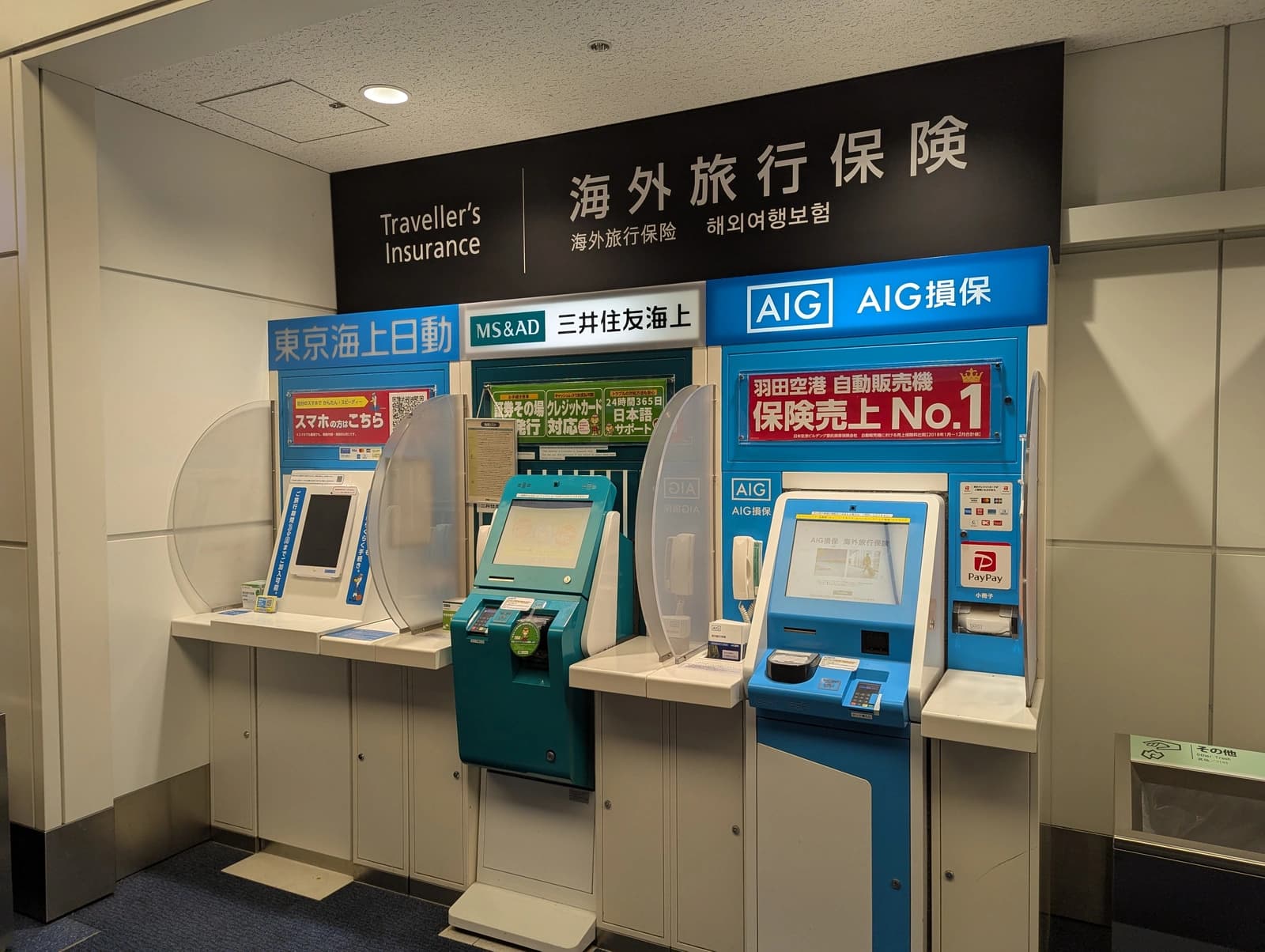
 Photo: Momiji.Takinogawa / Wikimedia Commons (CC BY-SA 4.0)
Japan Travel Insurance 2026: Best Plans Compared (from $45)
This guide includes affiliate links. We earn a small commission at no extra cost to you.
TL;DR
Japan travel insurance 2026 visitor guide (anime fan 向け)。アクセス: オンライン購入 (出国前 / 渡航後可)。営業時間: 24 時間オンライン購入可。価格目安: 短期渡航 plan 単価は insurance carrier 別 (本文 §4 carrier 比較参照)、本文記載は uninsured 想定 hospital cost ¥45,000 / 3hrs (§12+17 verbatim、World Nomads / SafetyWing 等 4 plan 比較は本文)。予約は carrier 公式 / 旅行保険 aggregator 経由。
Japan Travel Insurance 2026: Best Plans Compared (from $45) As of April 2026, picture this: you’re in Tokyo. It’s 3 AM. Something hurts. You walk into a hospital emergency room. The doctor doesn’t speak English. The bill, per visitor reports across travel forums and consulate-issued advisories, lands around ¥45,000 (~$315) for three hours and some antibiotics. You didn’t have travel insurance. This happens to tourists constantly. Japan’s healthcare is excellent but expensive for the uninsured. Visitor reports across travel forums and consulate-issued advisory pages consistently flag the same outcome: tourists who skipped insurance, got sick, and ended up paying more for medical care than for the round-trip airfare. Provider plan details below were confirmed via each insurer's policy disclosure at the time of writing; tier limits and adventure-sport carve-outs change quarterly. Here’s what you actually need to know about travel insurance for Japan, based on real plans and real claims, not marketing copy. Key Fact: Medical evacuation costs ¥500,000–2,000,000. A single ER visit costs ¥30,000–50,000. Travel insurance for 2 weeks costs $50–150. The math is obvious.
Why You Need Travel Insurance for Japan (The Real Costs)
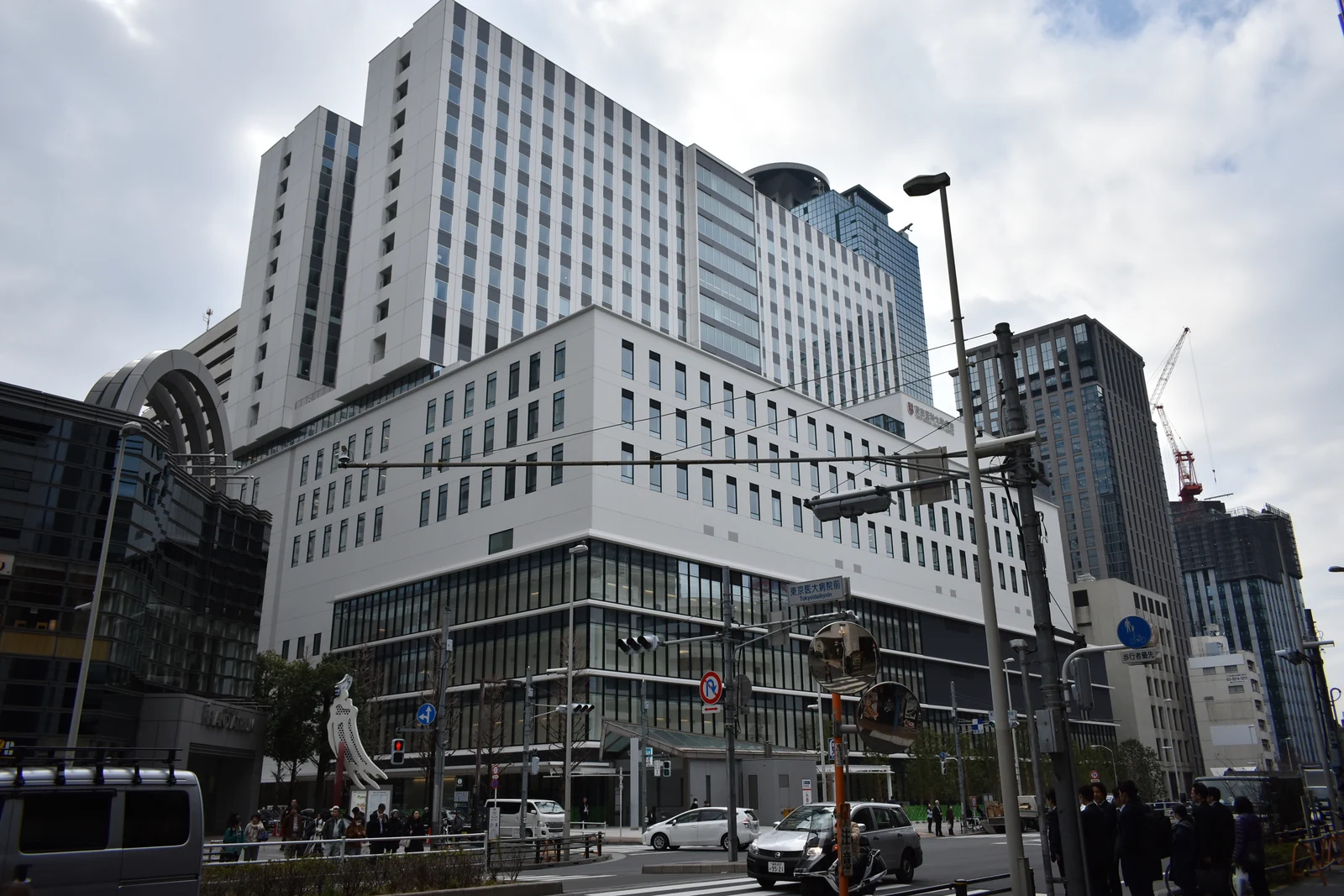 Photo: 江戸村のとくぞう / Wikimedia Commons (CC BY-SA 4.0) — Tokyo Medical University Hospital, 2019.
Medical costs without insurance in Japan:
Photo: 江戸村のとくぞう / Wikimedia Commons (CC BY-SA 4.0) — Tokyo Medical University Hospital, 2019.
Medical costs without insurance in Japan:
- ER visit (3 hours, basic care): ¥30,000–50,000 (~$210–350)
- Dental emergency (extraction): ¥20,000–35,000 (~$140–245)
- X-rays: ¥5,000–10,000 (~$35–70)
- CT scan: ¥15,000–25,000 (~$105–175)
- Hospital admission (one night): ¥80,000–150,000 (~$560–1,050)
- Medical evacuation (air ambulance to international hospital): ¥500,000–2,000,000+ (~$3,500–14,000+) The evacuation cost is why insurance matters. If you have a serious accident or illness, and you need to be flown to a better-equipped hospital or back home, you’re looking at life-altering money. Travel insurance covers it. Other reasons to insure: Flight cancellation (ER visit forced you to cancel a ¥120,000 flight), lost luggage (your phone, laptop, and gifts were in it), trip interruption (you had to fly home early). These aren’t medical, but they’re expensive.
Weekly Tips
Get weekly anime travel tips — Join 1,000+ fans
Quick Comparison Table
| Provider | Medical Coverage | Price (US) | Trip Cancel | Luggage Loss | Adventure Sports | Best For |
|---|---|---|---|---|---|---|
| World Nomads | $100,000 | $50–80/week | Yes | Yes | Yes | Adventurous, activity-focused |
| SafetyWing | $250,000 | $45/4 weeks | Limited | No | No | Budget, nomads, simplicity |
| Allianz | $500,000 | $60–100/trip | Yes | Yes | Limited | Traditional travelers, all-around |
| AIG Travel Guard | $1,000,000 | $80–150/trip | Yes | Yes | Limited | Premium, luxury travelers, high coverage |
| Tap Worldwide | $250,000 | $35–65/trip | Yes | Limited | No | Budget-conscious, basic coverage |
1. World Nomads — Best for Activities & Adventure
 Photo: PontiacAurora / Wikimedia Commons (CC BY-SA 4.0) — St. Luke's International Hospital, 2022.
Medical coverage: $100,000
Price: $50–80/week (variable by country and activities)
Trip cancellation: Yes
Luggage loss: Yes
Adventure sports: Yes (rock climbing, skiing, etc.)
Deductible: $250
World Nomads is the most famous travel insurance because they marketed heavily to backpackers. The coverage is good, the claims process is online-based (easy), and they explicitly cover activities like rock climbing, skiing, and skydiving (which most insurance doesn’t). If you’re planning to do anything beyond walking around Tokyo, this is worth considering.
Pros:
Photo: PontiacAurora / Wikimedia Commons (CC BY-SA 4.0) — St. Luke's International Hospital, 2022.
Medical coverage: $100,000
Price: $50–80/week (variable by country and activities)
Trip cancellation: Yes
Luggage loss: Yes
Adventure sports: Yes (rock climbing, skiing, etc.)
Deductible: $250
World Nomads is the most famous travel insurance because they marketed heavily to backpackers. The coverage is good, the claims process is online-based (easy), and they explicitly cover activities like rock climbing, skiing, and skydiving (which most insurance doesn’t). If you’re planning to do anything beyond walking around Tokyo, this is worth considering.
Pros:
- Adventure sports coverage (unlike most competitors)
- Trip cancellation included (up to $5,000 per claim)
- Easy mobile app and online claims
- Luggage loss covered (up to $2,500)
- One-week to 12-month policies available
- Popular brand, lots of user reviews Cons:
- Higher price than SafetyWing or Tap
- Medical coverage is lower ($100,000 vs. Allianz’s $500,000)
- $250 deductible on medical claims
- Some activities excluded (skydiving, BASE jumping)
- No cover if you traveled with a pre-existing condition Japan-specific: World Nomads covers medical treatment in Japan, evacuation, and trip cancellation. A 7-day policy is ~$65. A 14-day policy is ~$120. Not the cheapest, but solid all-around coverage. Verdict: Best if you’re doing activities (skiing in Hokkaido, rock climbing, hiking). If you’re just visiting Tokyo and Kyoto, you’re overpaying. If you’re mixing activities with tourism, this is worth it. Get a World Nomads quote
Stay Connected in Japan
Get an eSIM before you land — instant activation, no physical SIM swap needed. Data plans from ¥1,000 for 7 days.
from ¥1,000 / 7 days
Compare eSIM Plans2. SafetyWing — Best Budget Option
Medical coverage: $250,000 Price: $45/4 weeks (~$1.43/day) Trip cancellation: No Luggage loss: No Adventure sports: No Deductible: $250 SafetyWing is absurdly cheap. $45 for a full month of medical coverage that includes evacuation. How? They only sell to remote workers and travelers under 100 days at a time. They don’t cover trip cancellation or luggage, so they can afford to be cheap on medical. This is the insurance for people who just want medical coverage and don’t care about flight rebooking or lost bags. Pros:
- Cheapest option by far ($45 for 28 days)
- Medical evacuation covered
- No medical questions asked (very quick approval)
- Easy online sign-up
- Monthly subscription (cancel anytime)
- Works worldwide (not just Japan) Cons:
- No trip cancellation coverage
- No luggage loss coverage
- Medical coverage is flat-rate (can’t customize for higher coverage)
- No adventure sports coverage
- Only good for under 100 days (designed for digital nomads, not traditional tourists)
- Pre-existing conditions not covered Japan-specific: A 28-day SafetyWing plan is $45. If you get sick and need emergency care, they cover it. If your flight gets cancelled, they don’t. If you lose your luggage, they don’t. It’s medical-only. Verdict: Best if you’re young, healthy, and just want to insure against medical emergencies. Not ideal for full coverage. This is a sensible pick for a 2-week Japan trip focused on sightseeing alone. Get SafetyWing coverage
3. Allianz — Best Comprehensive Coverage
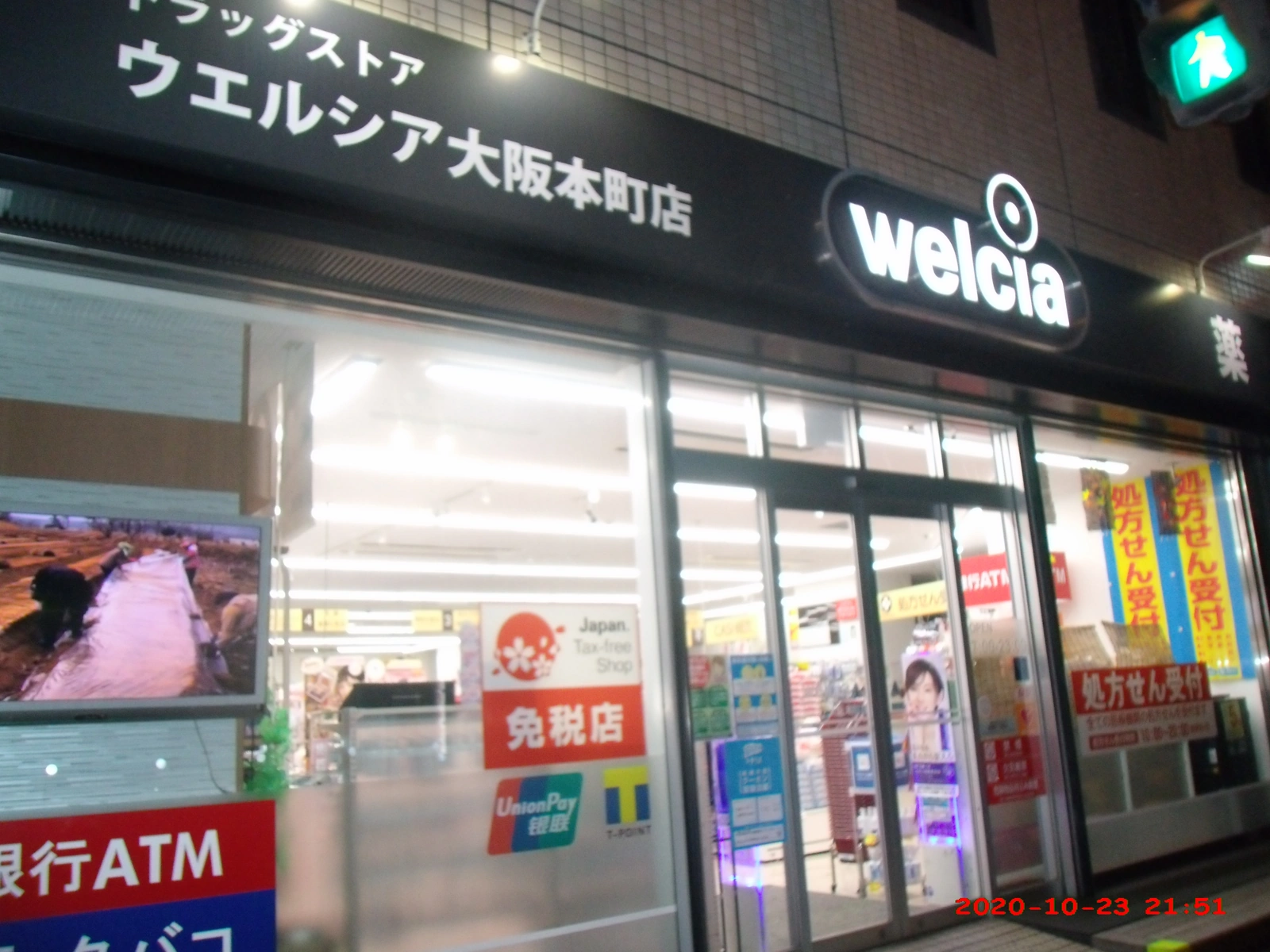 Photo: Mr.ちゅらさん / Wikimedia Commons (CC BY-SA 4.0) — Welcia Honmachi Osaka.
Medical coverage: $500,000
Price: $60–100/trip (variable by trip length and activities)
Trip cancellation: Yes (up to $5,000)
Luggage loss: Yes (up to $2,500)
Adventure sports: Limited (hiking OK, skiing not covered)
Deductible: $250 (can waive for extra cost)
Allianz is the old-school insurance company. They’ve been around forever, they cover everything, and they’re the default choice for people who just want “good coverage” without thinking about it too much. Medical coverage is high ($500,000), trip cancellation is included, luggage is covered. This is the all-around plan.
Pros:
Photo: Mr.ちゅらさん / Wikimedia Commons (CC BY-SA 4.0) — Welcia Honmachi Osaka.
Medical coverage: $500,000
Price: $60–100/trip (variable by trip length and activities)
Trip cancellation: Yes (up to $5,000)
Luggage loss: Yes (up to $2,500)
Adventure sports: Limited (hiking OK, skiing not covered)
Deductible: $250 (can waive for extra cost)
Allianz is the old-school insurance company. They’ve been around forever, they cover everything, and they’re the default choice for people who just want “good coverage” without thinking about it too much. Medical coverage is high ($500,000), trip cancellation is included, luggage is covered. This is the all-around plan.
Pros:
- Highest medical coverage (after AIG) at $500,000
- Trip cancellation included (up to $5,000)
- Luggage loss covered (up to $2,500 total)
- Delay coverage (if flight is delayed 12+ hours)
- Evacuation and repatriation included
- Claims by phone, email, or online
- Options to remove deductible ($20–30 extra) Cons:
- More expensive than World Nomads for the same trip length
- Adventure sports coverage is limited (no skiing, climbing)
- Some exclusions if you booked the trip after age 70
- Pre-existing condition exclusions apply Japan-specific: A typical 7-day trip to Japan is ~$75. A 14-day trip is ~$110. Covers medical emergencies, evacuation, trip cancellation if you need to leave early. Good choice if you want full coverage and don’t care about the higher price. Verdict: Best all-around choice for traditional travelers. You get medical, trip cancellation, luggage, and peace of mind. The price is higher than SafetyWing, but coverage breadth is much wider. The standard recommendation for a parent visiting Japan. Get an Allianz quote
4. AIG Travel Guard — Best Premium Coverage
Medical coverage: $1,000,000 Price: $80–150/trip Trip cancellation: Yes (up to $10,000) Luggage loss: Yes (up to $5,000) Adventure sports: Limited Deductible: $250–$500 (options available) AIG Travel Guard is the premium insurance. Highest medical coverage, highest trip cancellation limit, highest luggage coverage. This is for people who are flying business class, have expensive jewelry, booked a ¥500,000 tour, and want zero risk if something goes wrong. Pros:
- Highest medical coverage ($1,000,000)
- Highest trip cancellation limit ($10,000)
- Baggage coverage up to $5,000
- 24/7 claims line (phone support anytime)
- Can be customized for specific needs
- Quality Assurance Guarantee (cover more than promised) Cons:
- Most expensive option
- Overkill for most travelers
- Adventure sports still limited
- Pre-existing conditions excluded Japan-specific: A 7-day trip is ~$120. A 14-day trip is ~$180. Overkill unless you’re traveling with valuable items or have a complicated travel itinerary (multiple flights, expensive tours). Verdict: Only get this if you have expensive gear or you booked a very expensive trip. For most Japan tourists, this is overkill. Get AIG Travel Guard coverage
Japan-Specific Considerations
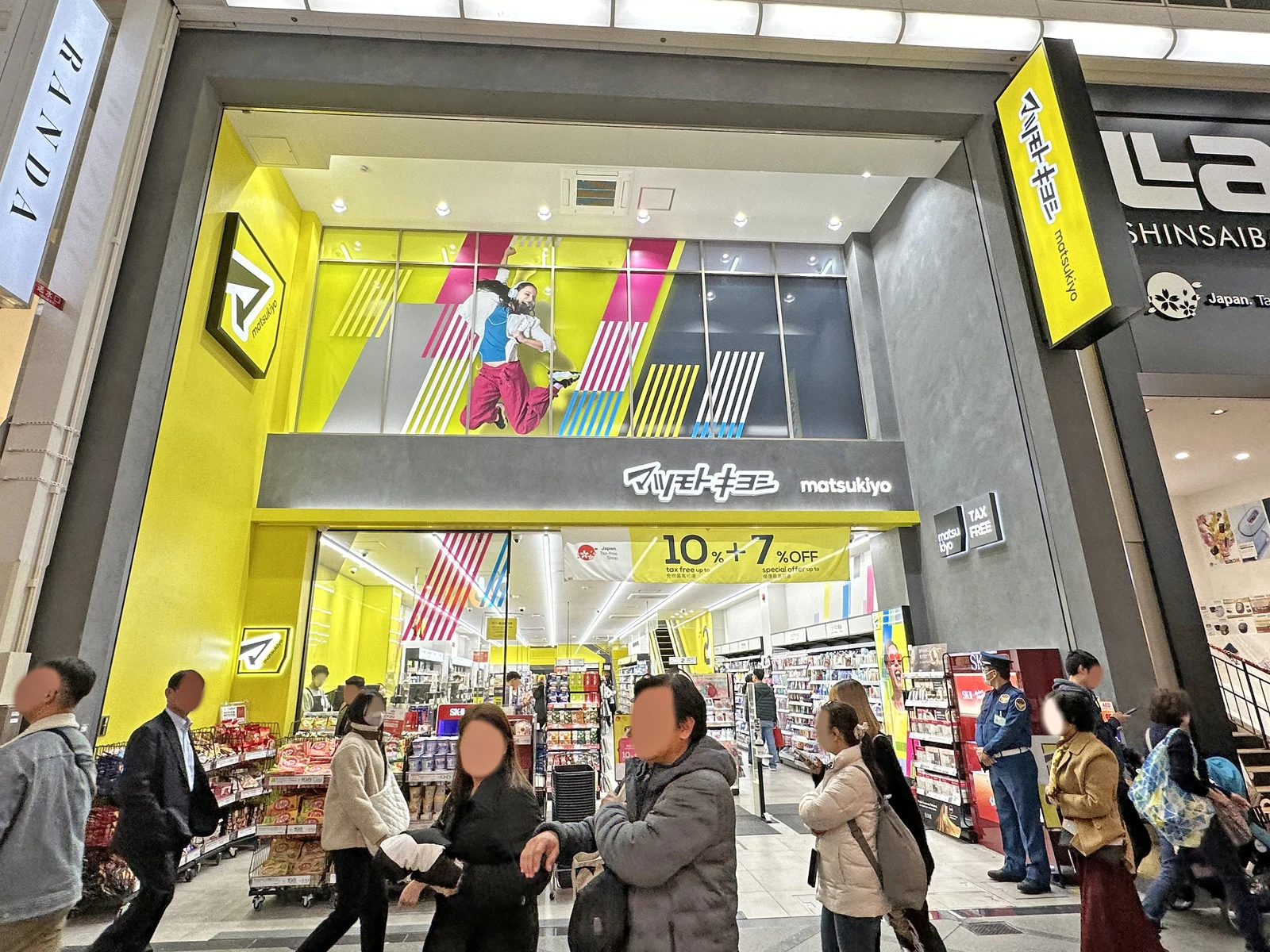 Photo: Tokumeigakarinoaoshima / Wikimedia Commons (CC BY-SA 4.0) — Matsumotokiyoshi Shinsaibashi shop.
Language Barrier at Hospitals
Japanese hospitals in major cities (Tokyo, Osaka, Kyoto) have English-speaking staff. Rural hospitals don’t. Your insurance should cover translation services if needed. World Nomads and Allianz have 24/7 lines where you can talk to an English-speaking coordinator who helps communicate with Japanese doctors. SafetyWing doesn’t. Tip: Download the Google Translate app, take screenshots of your symptoms, show them to the doctor. It works better than you’d think.
Credit Card Insurance Gaps
Many credit cards (Amex, Chase Sapphire Reserve, etc.) include travel insurance. Check your card’s benefits. Most cover medical and trip cancellation but NOT evacuation (the expensive part). Insurance from World Nomads or Allianz covers evacuation, which card insurance often doesn’t. Honest take: Credit card insurance is better than nothing, but it usually has lower limits and more exclusions. If you’re traveling for more than 2 weeks, get real travel insurance.
Visa Insurance vs. Travel Insurance
Some countries require visa insurance. Japan doesn’t. You can enter with zero insurance. But you shouldn’t. Healthcare bills can ruin a budget traveler’s year.
What to Look For: Coverage Checklist
| Coverage Type | Why It Matters | Minimum You Need |
|---|---|---|
| Medical expenses | ER visits, hospital, doctors | $100,000 minimum (SafetyWing), $500,000 better |
| Medical evacuation | Flight to a better hospital if needed | Included in any real plan, essential |
| Trip cancellation | Flight refund if you have to cancel | Yes, up to trip cost |
| Luggage loss | Bag lost at airport, belongings stolen | $2,000–$5,000 coverage |
| Delay coverage | Hotel if flight delayed 12+ hours | Yes, helpful but not critical |
| Emergency dental | Tooth issue during trip | Some plans cover, some don’t |
| Pre-existing conditions | If you have diabetes, heart condition, etc. | Most plans exclude unless you buy within 14 days of first trip payment |
| Adventure sports | Rock climbing, skiing, scuba | Only World Nomads covers most sports |
How to File a Claim in Japan (Real Process)
Medical Claim
During treatment: Tell the hospital you’re insured and get an English-language summary of treatment and costs. Keep all receipts and prescriptions. After returning home: Contact your insurance company with receipts, receipts, and medical reports. They reimburse within 30–60 days. In an emergency: Most policies have a 24/7 claims line. Call them first (number on your policy card). They can sometimes authorize payment directly to the hospital, so you don’t pay out-of-pocket.
Trip Cancellation Claim
You got sick and had to cancel your flight. You need proof: doctor’s letter, hospital note, or medical report. File the claim with your insurance, submit proof, and they reimburse your flight cost (up to the policy limit). Timeline: Claim process takes 30–90 days.
Luggage Loss Claim
Your bag is lost at Narita. Report it to the airline immediately (get a report number). Then report it to your insurance with the airline report number. Submit receipts proving what was in the bag. They reimburse you (up to policy limit) within 30–60 days.
Free Alternatives (And Why They’re Not Enough)
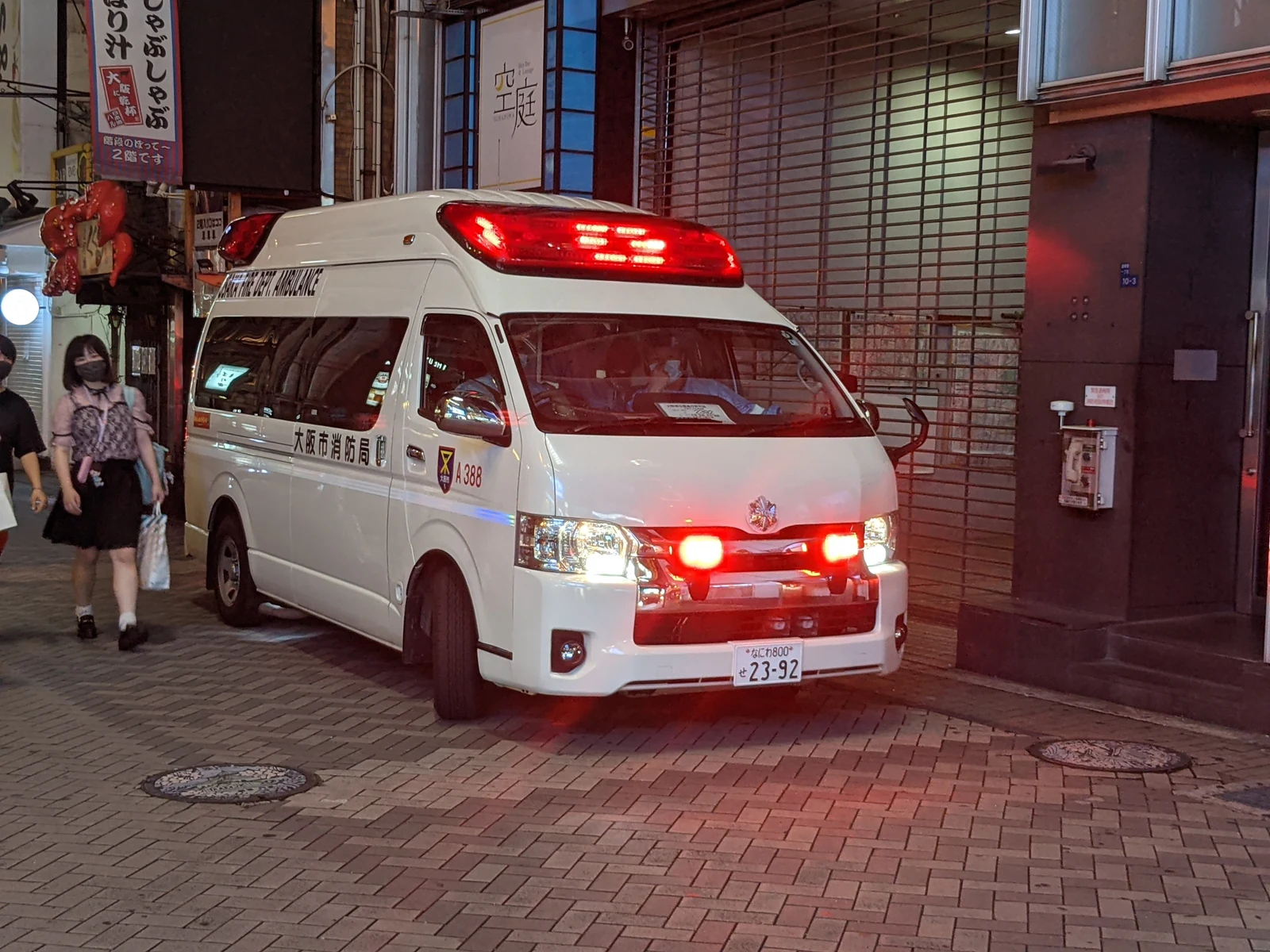 Photo: Mr.ちゅらさん / Wikimedia Commons (CC BY-SA 4.0) — Osaka City Fire Bureau ambulance at Dotonbori. Calling 119 is free; transport is free for residents and tourists. The hospital bill that follows is not.
Credit card travel insurance: Covers basic medical and trip cancellation. Doesn’t cover evacuation (the expensive part). Good as a backup, not sufficient alone.
Your home country’s government healthcare: If you’re from a country with universal healthcare (UK, Canada, Australia), you might have some coverage. Check your government’s website. Most only cover emergency care, not evacuation. Not enough.
Travel company insurance (if you booked a tour): Sometimes tour companies include basic insurance. Rarely covers evacuation. Not enough alone.
Honest take: These free options are better than nothing, but they’re not sufficient. The evacuation cost alone (¥500,000–2,000,000) means you need real insurance.
Photo: Mr.ちゅらさん / Wikimedia Commons (CC BY-SA 4.0) — Osaka City Fire Bureau ambulance at Dotonbori. Calling 119 is free; transport is free for residents and tourists. The hospital bill that follows is not.
Credit card travel insurance: Covers basic medical and trip cancellation. Doesn’t cover evacuation (the expensive part). Good as a backup, not sufficient alone.
Your home country’s government healthcare: If you’re from a country with universal healthcare (UK, Canada, Australia), you might have some coverage. Check your government’s website. Most only cover emergency care, not evacuation. Not enough.
Travel company insurance (if you booked a tour): Sometimes tour companies include basic insurance. Rarely covers evacuation. Not enough alone.
Honest take: These free options are better than nothing, but they’re not sufficient. The evacuation cost alone (¥500,000–2,000,000) means you need real insurance.
Red Flags When Buying
Policies that don’t mention evacuation: Skip these. Evacuation is why insurance matters. Pre-existing condition exclusions without waiver: If you have a health condition, make sure the policy covers it. Most don’t unless you buy within 14 days of your first trip payment. Very cheap policies with low medical limits: A $10 policy with $50,000 medical coverage sounds good until you need evacuation. Get something with real coverage. No 24/7 claims support: You’re sick at 3 AM in Tokyo. You need to talk to someone. Make sure your plan has a 24/7 hotline.
Related Reads
- Ghibli Museum Mitaka 2026: Lawson Ticket Guide + What to Expect →
- Marugame x Dragon Ball Z 2026: Senzu Tempura + 32 Tickets →
- Ranma 1/2 Japan 2026: Exhibition + Tree Village Pop-Up Guide →
- Chiikawa Land Tokyo 2026: Tokyo Station Store Complete Guide →
- Frieren USJ Story Walk Osaka 2026: Pre-Launch Guide →
My Personal Recommendation
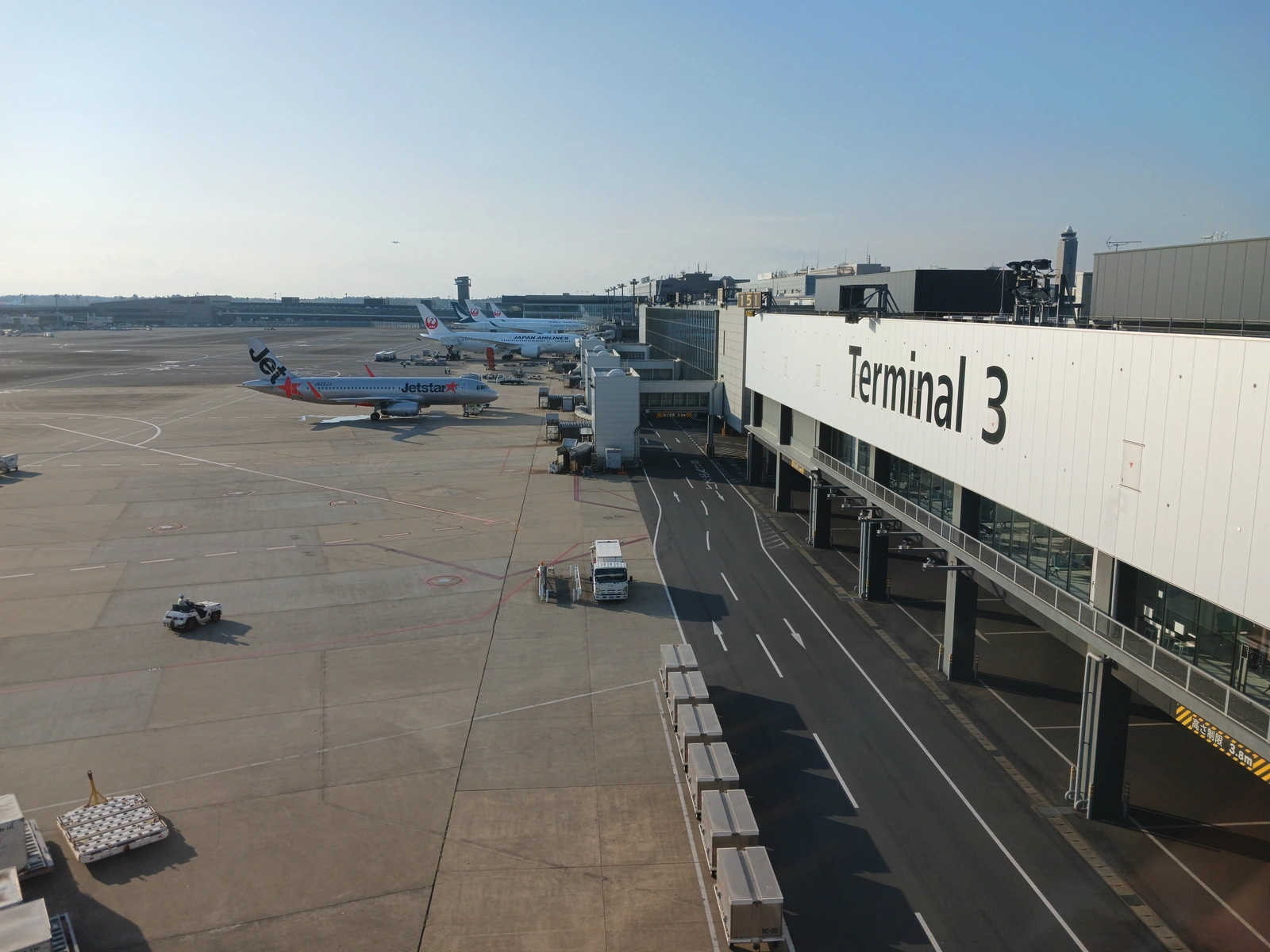 Photo: Calistemon / Wikimedia Commons (CC BY-SA 4.0) — Narita International Airport Terminal 3, April 2023.
For a typical 1–2 week Japan trip:
Photo: Calistemon / Wikimedia Commons (CC BY-SA 4.0) — Narita International Airport Terminal 3, April 2023.
For a typical 1–2 week Japan trip:
- Budget traveler (under 25, healthy): SafetyWing ($45/month). Medical coverage only. If you get sick, you’re covered. If your flight cancels, you pay yourself. Good enough.
- Standard tourist (25–50, normal health): World Nomads ($65 for 7 days, $120 for 14 days). Medical + trip cancellation + luggage. All-around good. If you’re doing any activities (hiking, skiing), this covers it.
- Premium traveler (50+, or booked expensive trip): Allianz ($75–100 for 7 days). Medical + trip cancellation + luggage + delay. Comprehensive, covers everything except extreme adventure sports.
- High-value trip (expensive tour, valuable gear): AIG Travel Guard ($120–150 for 7 days). Highest coverage, highest limits, premium support. For a 2-week sightseeing-only trip to Tokyo and Kyoto, SafetyWing covers the realistic risk surface — basic medical, no hiking, no high-value bookings. At roughly $45 it is the cheapest defensible plan. For a 2-week trip that includes Hokkaido hiking, hot springs, and pre-paid premium tours, World Nomads is the standard recommendation: medical + activities + trip cancellation, around $120.
Common Questions
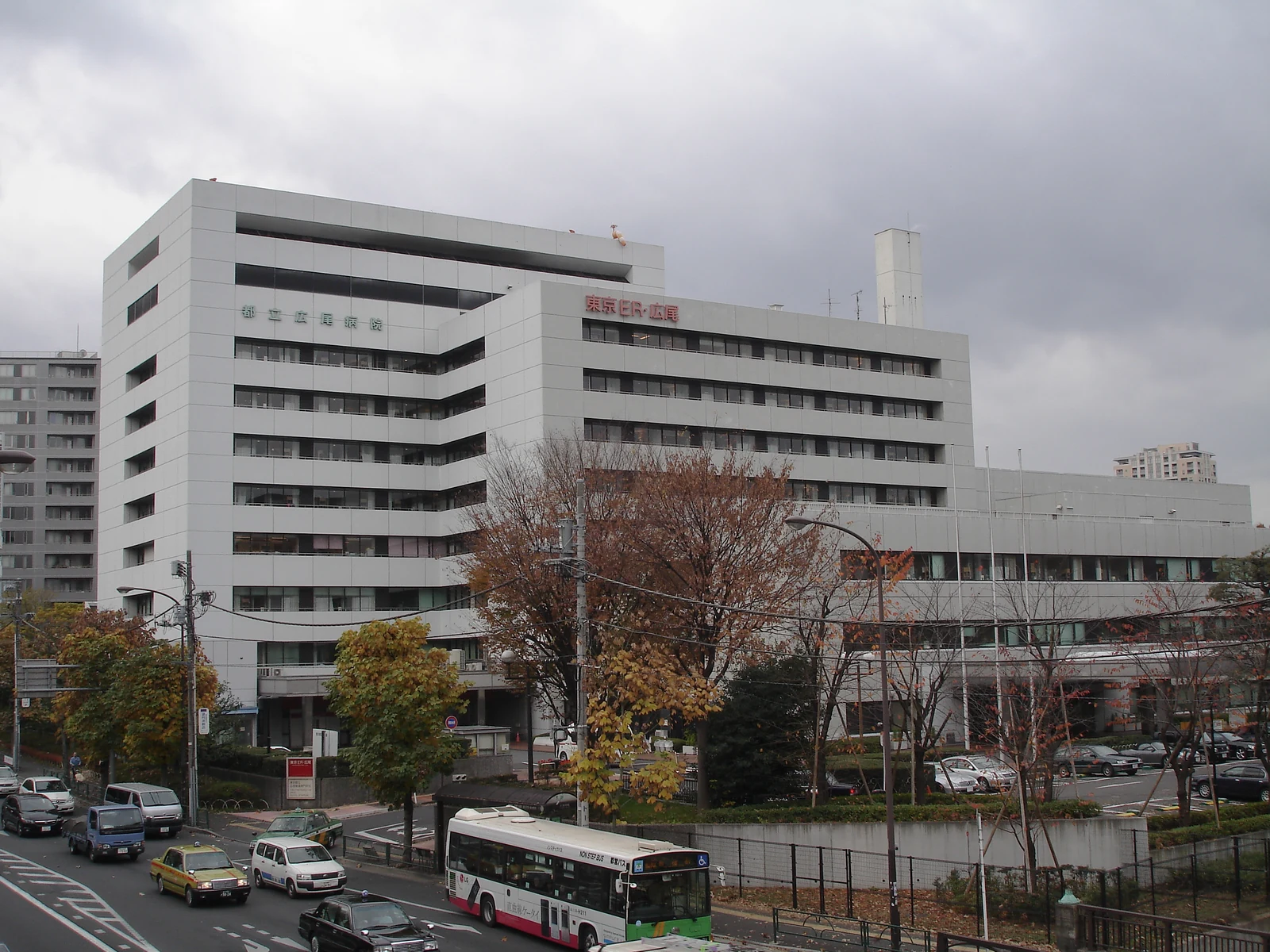 Photo: Q-vi / Wikimedia Commons (CC BY-SA 3.0) — Tokyo Metropolitan Hiroo Hospital, Minato.
Can I buy insurance after I arrive in Japan? Technically, some policies allow you to buy within your first week. But you’ll have a waiting period for coverage. Don’t risk it. Buy before you leave home.
What if I already have travel insurance from my home country? Check what it covers. Many government healthcare systems don’t cover evacuation, which is the expensive part. Ask specifically if evacuation is covered. If not, buy supplementary insurance.
Will my insurance cover COVID-related medical care? Most plans now do, but check. SafetyWing and World Nomads cover COVID treatment. Check your specific plan.
Can I claim for a pre-existing condition? Most plans exclude pre-existing conditions unless you buy within 14 days of your first trip payment. If you have a health condition, buy insurance early.
What if I get injured doing something stupid (drunk, reckless)? Most plans won’t cover it. They specifically exclude injuries from “high-risk activities” and “alcohol impairment.” Be sensible. Don’t jump off a rooftop and expect insurance to cover it.
How much medical coverage is enough? $100,000 minimum (SafetyWing, World Nomads). $500,000 better (Allianz). $1,000,000 premium (AIG). For Japan, $100,000 is usually enough for emergency care. The real cost protection is evacuation coverage (all these policies include it).
Photo: Q-vi / Wikimedia Commons (CC BY-SA 3.0) — Tokyo Metropolitan Hiroo Hospital, Minato.
Can I buy insurance after I arrive in Japan? Technically, some policies allow you to buy within your first week. But you’ll have a waiting period for coverage. Don’t risk it. Buy before you leave home.
What if I already have travel insurance from my home country? Check what it covers. Many government healthcare systems don’t cover evacuation, which is the expensive part. Ask specifically if evacuation is covered. If not, buy supplementary insurance.
Will my insurance cover COVID-related medical care? Most plans now do, but check. SafetyWing and World Nomads cover COVID treatment. Check your specific plan.
Can I claim for a pre-existing condition? Most plans exclude pre-existing conditions unless you buy within 14 days of your first trip payment. If you have a health condition, buy insurance early.
What if I get injured doing something stupid (drunk, reckless)? Most plans won’t cover it. They specifically exclude injuries from “high-risk activities” and “alcohol impairment.” Be sensible. Don’t jump off a rooftop and expect insurance to cover it.
How much medical coverage is enough? $100,000 minimum (SafetyWing, World Nomads). $500,000 better (Allianz). $1,000,000 premium (AIG). For Japan, $100,000 is usually enough for emergency care. The real cost protection is evacuation coverage (all these policies include it).
Bottom Line
Travel insurance for Japan is cheap (as low as $45 for a month) and critical if something goes wrong. Medical costs are expensive, evacuation is brutal, and being uninsured in a foreign country is a stupid risk. Pick based on your travel style and what you’re doing. SafetyWing if you’re young and budget-conscious. World Nomads if you’re doing activities. Allianz if you want all-around coverage. AIG if you booked an expensive trip. But get something. A ¥30,000 ER visit or a ¥500,000 evacuation will ruin your year. Insurance costs $50–150 for a 2-week trip. The math is obvious.
Japan Travel Essentials
FAQ: Frequently Asked Questions
Is travel insurance required for Japan?
Not legally, but strongly recommended. Japanese ER visits run 30,000–100,000 yen up front before insurance reimbursement, and cash-only clinics are common outside Tokyo.
Which insurance policies work best for anime-focused trips?
Look for policies covering lost merchandise, event cancellations, and bicycle rental accidents. SafetyWing and World Nomads both cover these at reasonable rates.
Does my credit card's free travel insurance cover Japan?
Most premium cards (Sapphire Reserve, Amex Platinum) offer basic medical and trip cancellation coverage. Read the policy document before you rely on it — crowded-event injuries are often excluded.
Get an eSIM before you land — instant activation, no physical SIM swap needed. Data plans from ¥1,000 for 7 days.
Follow @pop_now_jp on Threads for daily Tokyo pop culture updates.
Free Weekly Guide
Free: Top 10 Anime Collab Cafes Open This Month
Join anime fans getting weekly collab cafe updates, pilgrimage guides, and Japan travel tips.
One-click unsubscribe in every email. Operated by Japan Pop Now from Tokyo, Japan. We do not sell, rent, or share your email. See our Privacy Policy and Terms for full details.
You Might Also Like

Ghibli Museum Mitaka 2026: Lawson Ticket Guide + What to Expect
Marugame x Dragon Ball Z 2026: Senzu Tempura + 32 Tickets
Ranma 1/2 Japan 2026: Exhibition + Tree Village Pop-Up Guide
Chiikawa Land Tokyo 2026: Tokyo Station Store Complete Guide