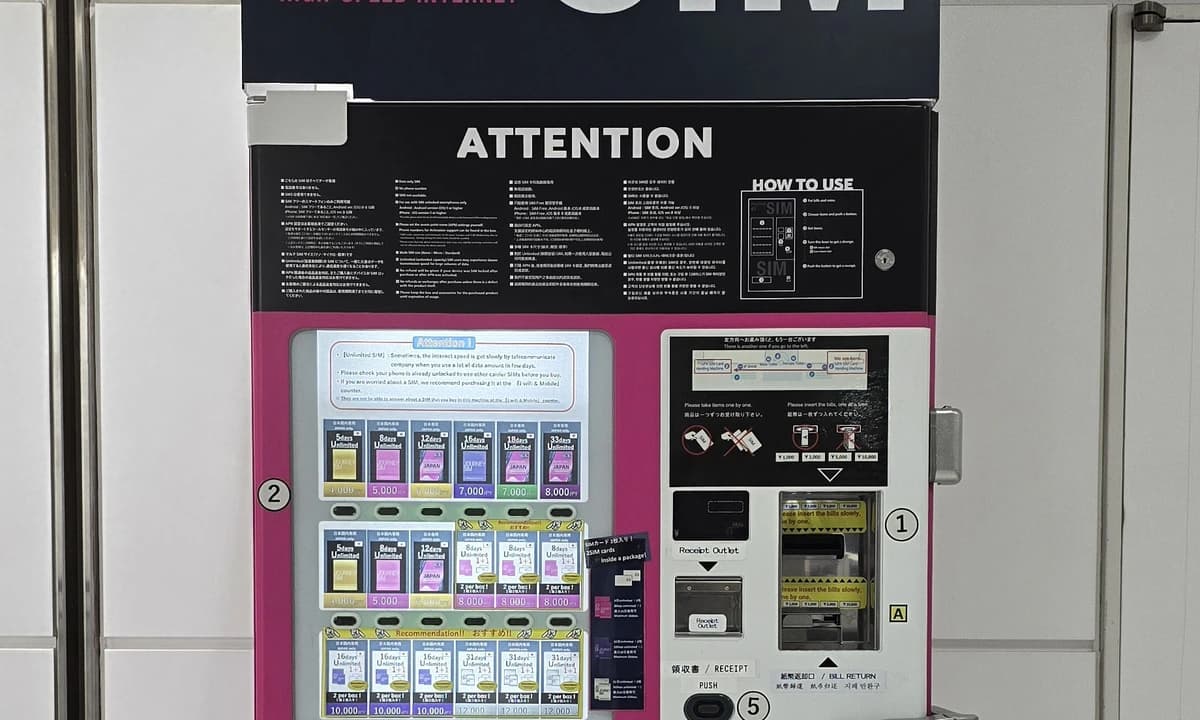
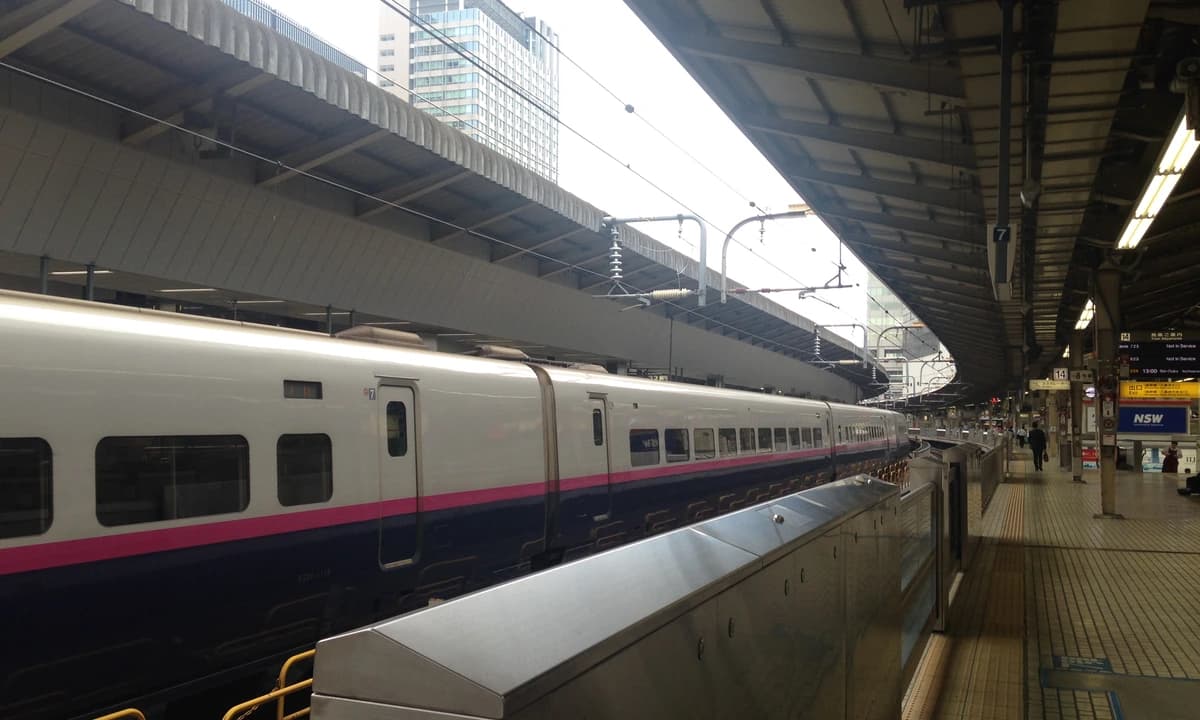
 Photo: そらみみ / Wikimedia Commons, CC BY-SA 4.0
How to Use Trains in Japan: A First-Timer's Anime Guide
This guide includes affiliate links. We earn a small commission at no extra cost to you.
TL;DR
Japan train system 2026 tourist visitor guide (IC card / Welcome Suica / JR Pass)。アクセス: 全国 JR + Tokyo Metro + 主要 private railway。営業時間: 始発-終電 (典型 5:00-24:00 帯)。価格目安: IC card prepay ¥1,000-10,000 / JR Pass 7-day ¥50,000 / Welcome Suica balance ¥1,000-¥20,000 (本文 verbatim §64+90)。Wheelchair-accessible 主要 station + English staff at JR East Travel Service Centers。Welcome Suica vs regular Suica: Welcome no deposit + balance non-refundable + 28-day valid。Before / after 12-hour flight: pay for express transfer (sleep on it) — local route saves ¥1,000 but body has zero spare capacity (§82)。
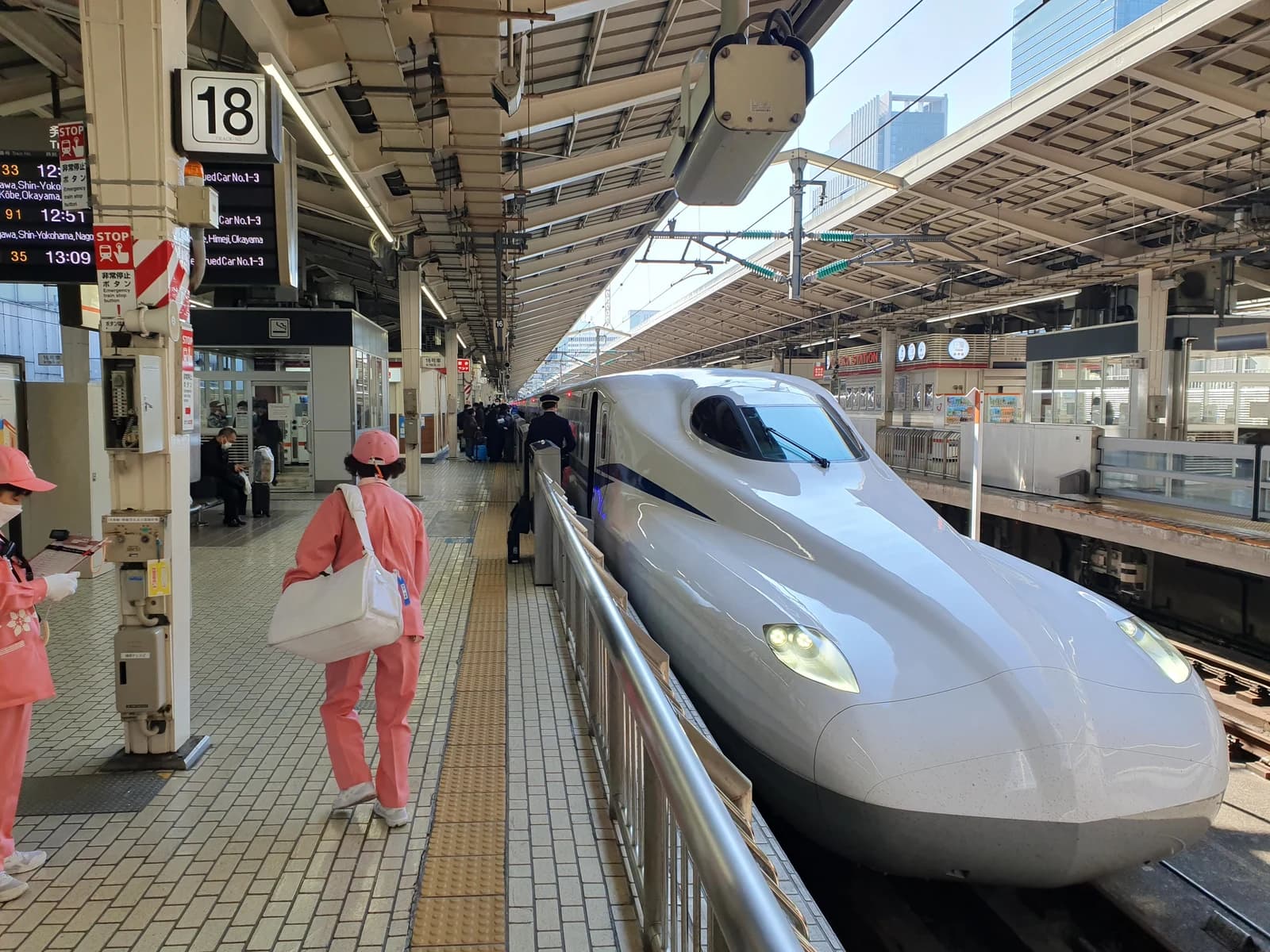
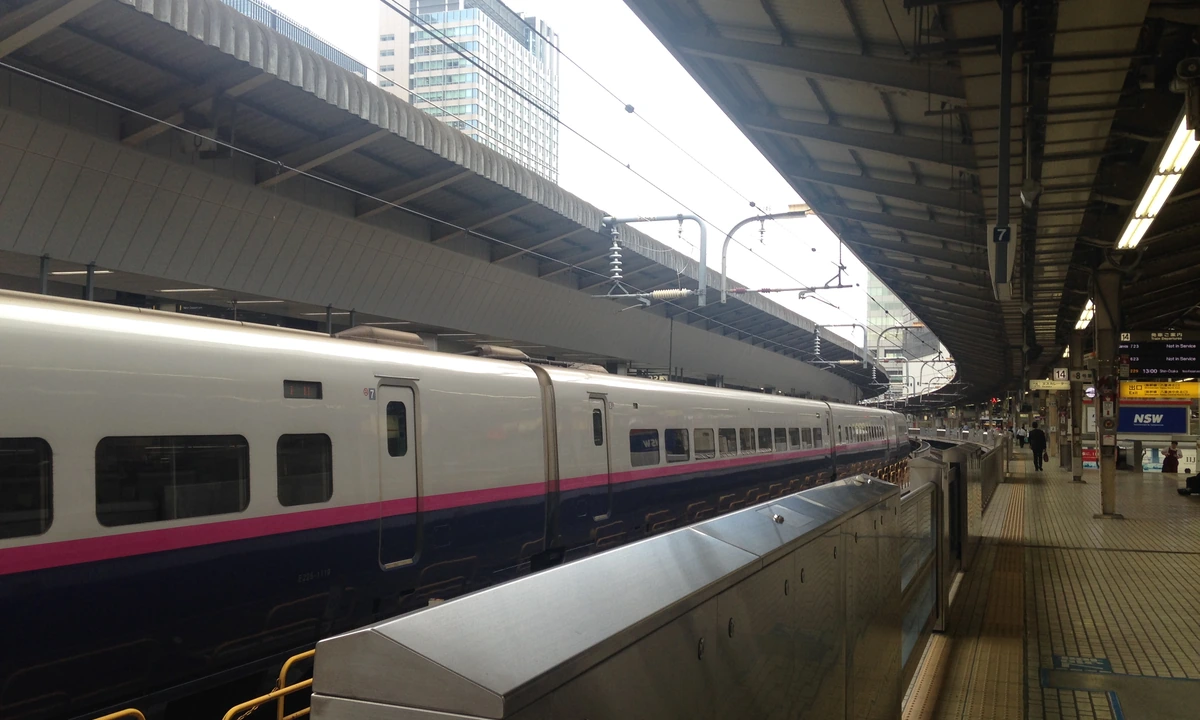 Photo: そらみみ / Wikimedia Commons, CC BY-SA 4.0. Shinkansen at a Tokyo Station platform, the high-speed rail spine of any first-timer trip.
Japan's trains are the best in the world to ride and the most confusing to start riding. First-time visitors at Narita, Haneda, and Kansai gates run into the same five problems on repeat — anime-pilgrimage tourists, families on a first Tokyo trip, and cabin crew on layovers all hit the same snags: picking the wrong card at the airport machine, walking into a women-only car at 8:15 on a Tuesday, missing the last train back to the hotel, getting stuck at a fare-adjustment machine because the IC card balance ran low, and burning the entire first afternoon trying to figure out a Shinkansen reservation that takes ninety seconds on a phone. This guide consolidates what first-timers most often need at arrivals: the exact tap sequence, the energy plan for jet-lagged day one, and the rules that consistently keep visitors out of the small embarrassments.
Riding trains in Japan as a tourist in 2026 comes down to four steps: pick up an IC card (Welcome Suica or regular Suica or PASMO at the airport JR Travel Service Center), tap in at the gate, transfer using the bilingual station signs and station numbers, then tap out at the destination — fares are auto-calculated. For Shinkansen rides, reserve seats in the Smart EX app or use a JR Pass; for first-day jet-lag energy, take the Narita Express or Haruka instead of the cheaper local route.Need the IC card and JR Pass before you fly? Klook sells the Welcome Suica and the Japan Rail Pass in English with QR delivery, pick up at the airport JR window without queueing for the Japanese ticket machine.
Trip essentials
| Detail | Info |
|---|---|
| Target Reader | First-time anime fan visiting Japan, landing at Narita / Haneda / Kansai, comfortable with smartphones, no Japanese reading required |
| Best Cards | Welcome Suica (28-day, no deposit, no refund) or regular Suica / PASMO / ICOCA (10-year, 500-yen refundable deposit) |
| Day-One Route | Narita Express (Tokyo) or Haruka (Osaka / Kyoto) — reserved seats, English signage, no transfers, jet-lag friendly |
| Shinkansen Booking | Smart EX app (English mode, IC-card-linked, ticketless boarding) or Klook JR Pass (QR collection at Tokyo / Shin-Osaka) |
| Women-Only Cars | Weekday rush only on most lines, all-day on a few Osaka and Tokyo lines — pink platform stickers mark the spot |
| Last Train Clock | Tokyo metro lines stop 00:10–00:30 from central stations; first trains restart around 04:30; Shinkansen runs 06:00 to ~24:00 |
| Cost | IC card prepay 1,000 to 10,000 yen at purchase; JR Pass 7-day 50,000 yen for unlimited Shinkansen and JR lines |
Weekly Tips
Get weekly anime travel tips — Join 1,000+ fans
The 60-Second Day-One Routine
The first hour after immigration is when the wrong choice costs the most energy. Here is the routine I run for jet-lagged arrivals at the three big international airports.
Narita (Tokyo). Walk to the JR East Travel Service Center in the basement (Narita Airport Station or Airport Terminal 2 Station) and ask in English for "Welcome Suica plus Narita Express round-trip." The combo hands you a tap-ready Suica and a reserved-seat Narita Express ticket to Tokyo / Shinjuku / Shibuya in a single transaction. The Narita Express is about 60 minutes to Tokyo Station, around 80 minutes to Shinjuku, with overhead luggage racks and English announcements, exactly what a body that just stepped off a 12-hour flight wants. Klook also sells the Narita Express ticket with English QR delivery if you want to skip the airport queue.
Haneda (Tokyo). The Tokyo Monorail to Hamamatsucho is the fastest non-train option (13 minutes), but the Keikyu Airport Line to Shinagawa is the more useful one because Shinagawa connects to the Yamanote Line and the Tokaido Shinkansen for next-day Osaka or Kyoto plans. Either way, buy the IC card first at the JR or Keikyu counter so you do not have to learn the ticket machine while exhausted.
Kansai (Osaka / Kyoto). Walk to the JR West Ticket Office at Kansai Airport Station and grab an ICOCA card plus Haruka express ticket combo. Haruka runs to Tennoji in 35 minutes, Shin-Osaka in 50 minutes, Kyoto in 80 minutes — reserved seats, English signage, and luggage racks. Klook sells the Haruka Kansai Airport Express ticket in English. If you are heading to a hotel inside Osaka with a JR Pass already active, Haruka is fully covered.
CA-perspective tip: The single biggest first-day mistake is taking the cheaper local airport-transfer route to save 1,000 yen. After 12 hours in the air your body has zero spare capacity for transfers with stairs and luggage. Pay for the express, sleep on it, and start day two fresh. The yen difference is the cheapest insurance you will buy on the trip.
Which IC Card Should You Buy?
There are two real choices for a first-time visitor in 2026.
Welcome Suica. The tourist-only card. No 500-yen deposit, valid 28 days from first tap, balance is non-refundable. You pick the load amount. 1,000, 2,000, 3,000, 4,000, 5,000, or 10,000 yen, at purchase, and recharge up to 20,000 yen in total balance whenever you want at any ticket machine. You can only buy it at the JR East Travel Service Centers at Narita Airport, Haneda Airport Terminal 3, or major Tokyo stations (Tokyo, Shibuya, Shinjuku, Ikebukuro, Ueno, Yokohama, Sendai). Each person buys one card. Best for stays of two to three weeks.
Regular Suica / PASMO / ICOCA. The 10-year card. 500-yen refundable deposit, balance is refundable when you hand the card back at a JR ticket counter. PASMO and Suica work in the Tokyo region, ICOCA in the Osaka region, but all three cards are interoperable nationwide — a Tokyo Suica taps into Osaka Metro gates without issue. Best if you might come back to Japan inside ten years and want to keep the card.
Mobile Suica or PASMO in Apple Wallet or Google Wallet works for most overseas-issued iPhones and Pixel devices since 2023 — you tap the phone instead of a card. The setup is in English and recharges run through Apple Pay or Google Pay. The catch is that some older Android models and some non-NFC iPhones cannot register a mobile IC card, so check before you fly.
| Card | Deposit | Validity | Refundable Balance | Where to Buy | Best For |
|---|---|---|---|---|---|
| Welcome Suica | 0 yen | 28 days | No | JR East airports + Tokyo stations | 2–3 week stays, no follow-up trip |
| Regular Suica / PASMO | 500 yen | 10 years | Yes (at JR / PASMO counter) | Any Tokyo-region station | Repeat visitors, longer stays |
| ICOCA | 500 yen | 10 years | Yes (at JR West counter) | Kansai-region stations | Osaka / Kyoto-first arrivals |
| Mobile Suica / PASMO | 0 yen | While device active | Yes (transfer to bank) | Apple Wallet / Google Wallet | iPhone or Pixel users who want one less object |
Stay Connected in Japan
Get an eSIM before you land — instant activation, no physical SIM swap needed. Data plans from ¥1,000 for 7 days.
from ¥1,000 / 7 days
Compare eSIM PlansHow to Tap In, Transfer, and Tap Out
Every Japan train ride is the same three-step rhythm.
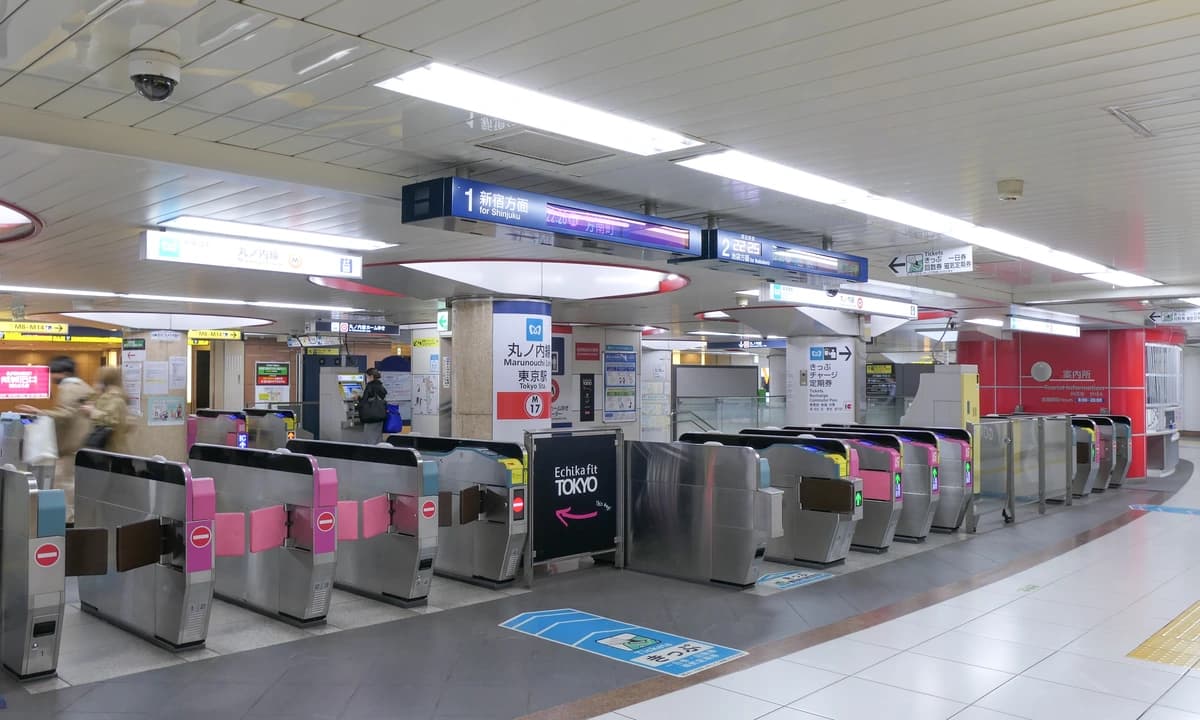
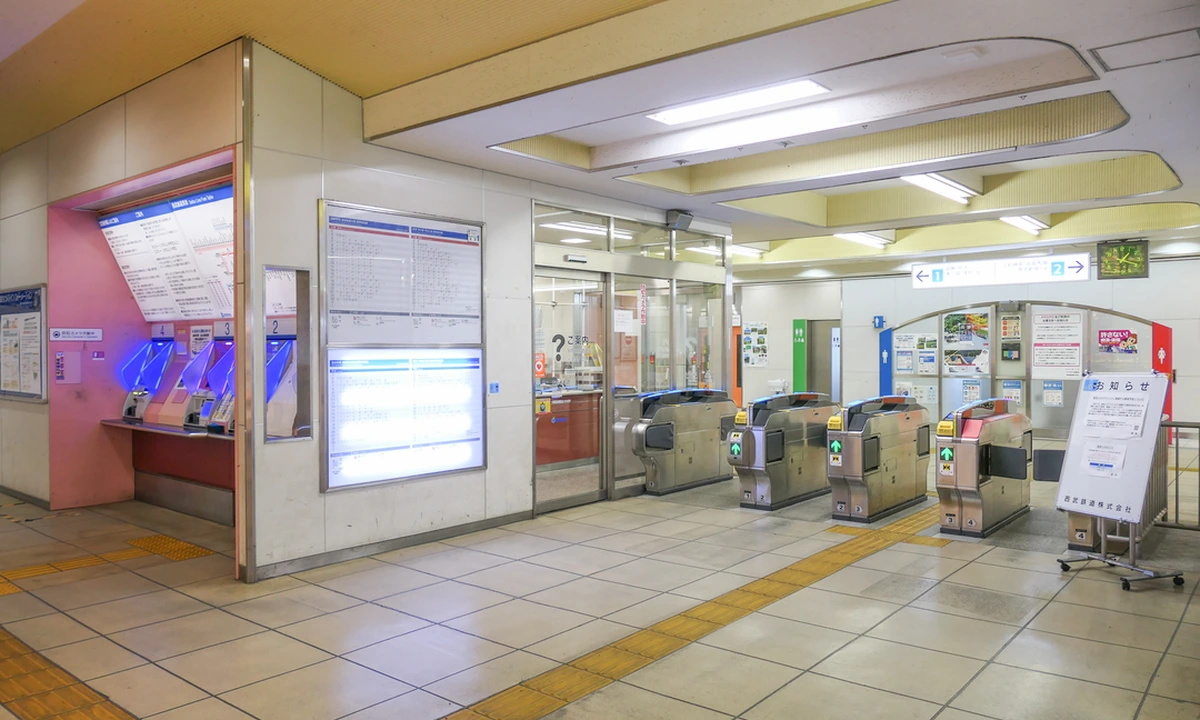 Photo: MaedaAkihiko / Wikimedia Commons, CC BY-SA 4.0. Row of JR East automatic ticket gates with the round IC card reader pads — the same layout you will tap through anywhere in the JR / private-railway network in 2026.
Tap in. Walk to the gate, hold the IC card flat on the blue reader pad for half a second, watch for the green arrow, walk through. The gate flap stays open if the card is valid; it shuts if the balance is too low (recharge at the green ticket machine marked "Charge / チャージ" near the gate, English mode is in the top-right corner). Cards work through wallets and most phone cases — you do not need to take it out.
Transfer. Japan's stations use a station-number system: every station has a letter-plus-number code (Shinjuku is JY 17 on the Yamanote Line, M 08 on the Marunouchi Line) printed on every sign. Follow the letter-color code for your line, orange for Chuo, green for Yamanote, red for Marunouchi — and the station numbers count up or down to your destination. The bilingual signs at every junction call out the next four stations and the transfer letters. You do not need to read kanji to ride Japanese trains in 2026.
Tap out. Hold the IC card on the gate reader at the destination station. The screen shows the fare deducted and the remaining balance. Done. The system calculated the cheapest legal route between your tap-in and tap-out automatically.
If the screen flashes a red ✕ at tap-out, the card balance ran out mid-ride. Walk to the fare-adjustment machine (精算機, seisanki) near the gates — a green machine with English-mode top-right, insert the card, top up by the displayed amount in coins or notes, and you are released through the gate. This is the single most common first-day stumble; the fix is one minute and you keep the card.
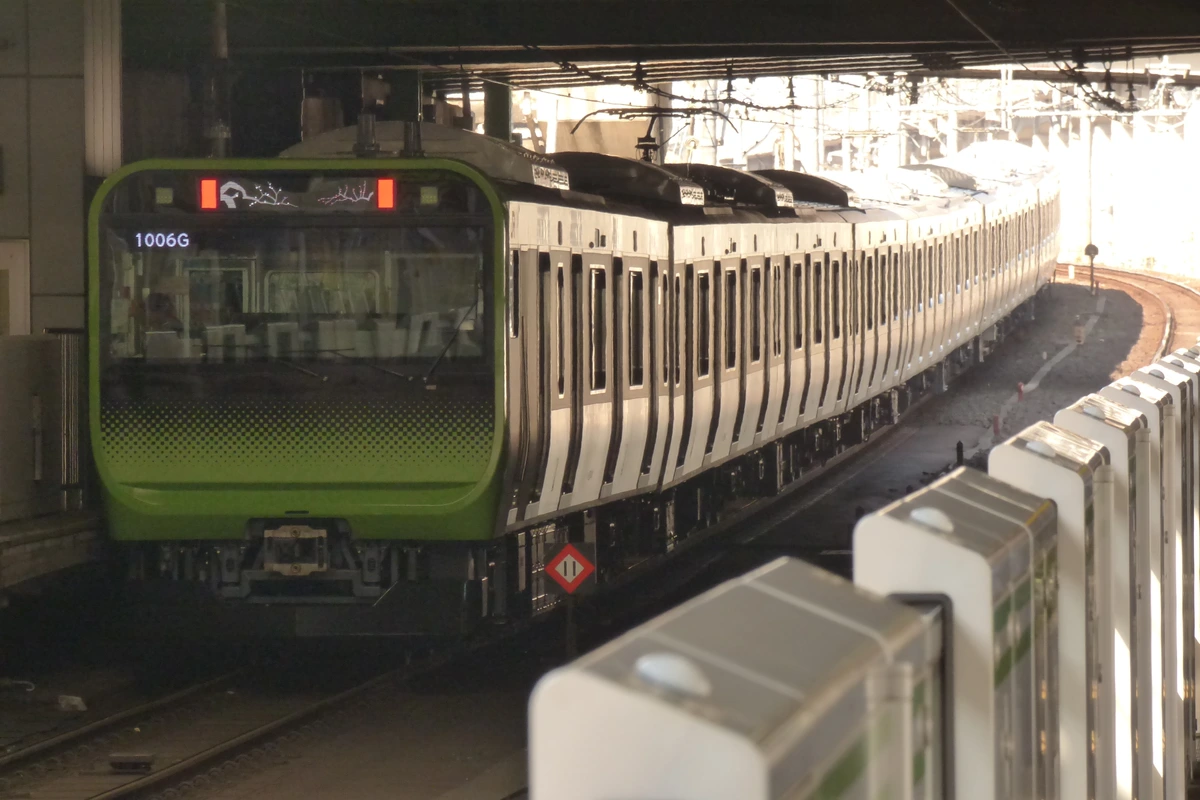 JR East Yamanote Line E235, the green-stripe loop that links Shinjuku, Shibuya, Ikebukuro, Tokyo, and Akihabara on a single circular line. Photo by Vlchang via Wikimedia Commons (CC BY-SA 4.0)
How to Read a Japanese Train Platform
Three things to spot when you reach the platform.
Pink stickers and signs (女性専用車 / Women Only). Marked with pink kanji + pink English text on the platform floor and on the side of the relevant train car. Hours vary by line and direction. On most JR and Tokyo Metro lines the women-only car runs weekday morning rush 07:30 to 09:30 in the inbound direction toward central Tokyo, and that is it — afternoons and weekends are mixed. Osaka Metro runs all-day women-only cars on multiple lines (every day, first to last train). Kintetsu and Hankyu run all-day women-only on commuter lines. Eligible to ride: women, boys in elementary school grade 6 or below, and people with disabilities plus their caregivers. If you accidentally board a women-only car as a man during the wrong window, the most common fix is to step off at the next station, walk down the platform, and reboard the next mixed car — staff will not penalize a tourist mistake, but you will get a polite tap on the shoulder.
Train order labels (1, 2, 3, …). Cars are numbered along the platform. Station-exit-to-platform signs tell you which car number ends up closest to your transfer or exit at the destination, for example, "Cars 9 to 11 are closest to the Yamanote Line transfer at Shinagawa." Boarding the right car saves 200 meters of walking on a body that is running on three hours of sleep.
Departure direction arrows (上り / 下り). Up-arrow (nobori) points toward Tokyo or the regional hub city; down-arrow (kudari) points away. On Osaka's loop line and Tokyo's Yamanote, the arrows are replaced by inner / outer ring labels (内回り / 外回り). Stations with two platforms have a single arrow on each platform; stations with four or more platforms have line-color arrows above each track. Take a photo of the platform sign before boarding — that way you can compare on a transfer.
 N700S Shinkansen at Tokyo Station, the workhorse for the Tokaido Tokyo-Shin-Osaka leg most tourists ride on a JR Pass or Smart EX booking. Photo by S.Raika via Wikimedia Commons (CC BY-SA 4.0)
How to Ride the Shinkansen for the First Time
The Shinkansen is its own ticket system, separate from the IC card local-train flow. Three reservation paths in 2026.
Smart EX app (recommended for tourists in 2026). Free download, English mode, no booth visit required. Sign up with passport name and a credit card, link the IC card you bought at the airport, and the Shinkansen reservation arrives as a barcode in the app. Tap the IC card at the Shinkansen gate instead of inserting a paper ticket. Smart EX covers the Tokaido (Tokyo–Shin-Osaka–Hakata), Sanyo, and Kyushu lines; for Tohoku, Joetsu, and Hokuriku Shinkansen lines, the equivalent app is EX-IC through JR East. The Smart EX app supports the ten interoperable IC cards (Suica, PASMO, ICOCA, Kitaca, manaca, TOICA, PiTaPa, Hayakaken, nimoca, SUGOCA) plus mobile Suica and mobile PASMO.
JR Pass (foreign-passport-holder ticket). 50,000 yen for the 7-day ordinary pass in 2026, with reserved seats included. The pass covers all JR Shinkansen lines except Nozomi and Mizuho — for Nozomi access, pay a separate Nozomi supplement at the JR window. The cheapest path is to buy the JR Pass through Klook before you fly and pick up the physical pass at any JR station ticket counter. Note: a second JR Pass price increase is scheduled for October 1, 2026 for third-party agencies — booking ahead before that date is the cheapest path.
Paper ticket at the JR midori-no-madoguchi (green window) booth. The walk-up option. Useful only if Smart EX gave you trouble or if you are doing a one-off Shinkansen leg that does not justify the JR Pass. English signage and English-speaking staff at major hubs (Tokyo, Shin-Osaka, Kyoto, Nagoya).
How to actually board: Shinkansen platforms are different from local platforms. The car number on your reservation matches the painted car-number markers on the Shinkansen platform, line up at that exact spot. The train stops for about 90 seconds at each station; doors open, you board with luggage, find your seat. Tickets are checked by the conductor walking through; if you are using Smart EX, the IC card scan at the gate is your ticket.
The Last-Train Clock
Plan the evening route around this, there is no "next train" in Japan after the last one.
Tokyo central stations. Most lines run their last train between 00:10 and 00:30 from central stations like Shinjuku, Shibuya, and Tokyo. The Yamanote Line last train from central stations is around 00:30 in either direction; the Tokyo Metro Ginza Line last train from Ueno-Hirokoji is around 00:10–00:30 depending on direction. First trains restart around 04:30. If the last train is missed, you wait, take a taxi (expensive — 8,000 to 18,000 yen across central Tokyo), or stay in a karaoke / manga café until first train.
Suburban routes (Chiba, Kamakura, Hakone). Last departures from central Tokyo to suburban destinations are earlier, leave central Tokyo by around 23:00 to be safe.
Shinkansen. Tokaido Shinkansen runs Tokyo to Shin-Osaka roughly 06:00 to 23:00 last departure; the last Nozomi southbound from Tokyo is around 21:00–21:30 to reach Shin-Osaka before midnight. Always check the night before in Smart EX or Google Maps.
If you are out late at Akihabara, Ikebukuro, or Shinjuku for an anime store run, set a phone alarm for 23:30 as a hard "head to the station now" cue — the alarm I personally set on every late-shopping evening.
Connectivity for the Train App
Every flow above assumes you have data on the phone — Google Maps, Smart EX, the Tokyo Metro app, station Wi-Fi at the bigger hubs, and the IC card recharge prompt. The cheapest reliable option in 2026 is an Airalo eSIM Japan plan (no affiliate; mention because it is the option I use), which activates before you leave the home country and works the moment the plane lands. If you prefer pocket Wi-Fi or a SIM card pickup at the airport, the Klook eSIM and pocket Wi-Fi listings cover both.
Related Reads
More Japan Travel Toolkit Guides
- Japan IC Card and Transit Guide for Anime Fans, the deeper reference on Suica, PASMO, ICOCA, and the regional lines they cover
- Japan Rail Pass 2026 Guide — when the JR Pass beats single tickets and when it does not
- JR Pass Anime Pilgrimage Routes 2026 — Tokyo, Osaka, Aichi, and Kamakura chained on a single 7-day pass
- Japan Trip Checklist for Anime Fans 2026, passport, IC card, eSIM, and Klook prep before you fly
- Japan eSIM, Pocket Wi-Fi, and SIM Card Guide — the connectivity layer that powers every transit-app step above
Book the Trains Before You Fly
The cheapest, lowest-friction setup for a first-timer in 2026 is the Klook Welcome Suica plus a Klook Japan Rail Pass if the trip includes any Shinkansen leg between Tokyo and Osaka or further. Add the airport express ticket for the day-one transfer. Three QR codes, one English checkout, and the entire transit layer is solved before you board the plane.
FAQ: Japan Trains for Tourists 2026
Q: Can I use one IC card for trains, buses, vending machines, and convenience stores all over Japan?
Yes. Suica, PASMO, ICOCA, and the seven other interoperable cards work nationwide on virtually every train, subway, and city bus, plus vending machines, convenience stores (7-Eleven, Lawson, FamilyMart), and many cafes and supermarkets. The card you buy in Tokyo works in Osaka, Kyoto, Fukuoka, and Sapporo without any registration step.
Q: Is a JR Pass needed for a Tokyo-only week?
No. The 7-day JR Pass at 50,000 yen pays off when there is at least one round-trip Tokyo to Shin-Osaka or Tokyo to Hiroshima Shinkansen leg involved. For a Tokyo-only itinerary, an IC card plus a one-day Tokyo Metro pass on heavy days is far cheaper.
Q: What is a women-only car and what happens if I board one by mistake?
A women-only car is a specific car on a train reserved for women, boys in elementary grade 6 or younger, and people with disabilities and their caregivers. Most lines run women-only cars only during weekday morning rush (around 07:30 to 09:30 inbound to central Tokyo); a few Osaka Metro and Kintetsu lines run them all day. Pink platform stickers and pink kanji signs mark the boarding spot. If you board by mistake during the wrong window, step off at the next station, walk down the platform, and reboard a mixed car. Staff are not punitive about tourist mistakes.
Q: How do I reserve a Shinkansen seat in English without going to a ticket counter?
Download the Smart EX app (free, English mode), register with passport name and a credit card, link the IC card you picked up at the airport, and book the Shinkansen ride in the app. The reserved seat is held in the app as a barcode; you tap your IC card at the Shinkansen gate to board. Smart EX covers Tokaido, Sanyo, and Kyushu Shinkansen. For JR East lines (Tohoku, Joetsu, Hokuriku Shinkansen), use the EX-IC equivalent or the JR East online reservation site.
Q: What time do trains stop running, and how do I get back to the hotel if I miss the last one?
Tokyo metro and JR lines run their last train between 00:10 and 00:30 from central stations depending on the line and direction; first trains restart around 04:30. There is no all-night train. If you miss the last train, options are: taxi (8,000 to 18,000 yen across central Tokyo), Uber or Go (the Japanese ride-hail apps, in English), karaoke or manga café until first train, or capsule hotel near the station you are stuck at. Set a phone alarm for 23:30 in central Tokyo as a hard cue.
Get an eSIM before you land — instant activation, no physical SIM swap needed. Data plans from ¥1,000 for 7 days.
Follow @pop_now_jp on Threads for daily Tokyo pop culture updates.
Free Weekly Guide
Free: Top 10 Anime Collab Cafes Open This Month
Join anime fans getting weekly collab cafe updates, pilgrimage guides, and Japan travel tips.
One-click unsubscribe in every email. Operated by Japan Pop Now from Tokyo, Japan. We do not sell, rent, or share your email. See our Privacy Policy and Terms for full details.
You Might Also Like
Japan IC Card 2026: Welcome Suica + Apple/Google Pay
Japan Rail Pass 2026: Worth ¥50,000? Calculator Inside
Japan Rail Pass 2026: Worth ¥50,000? Calculator Inside

Japan Trip Checklist for Anime Fans 2026: What to Book First