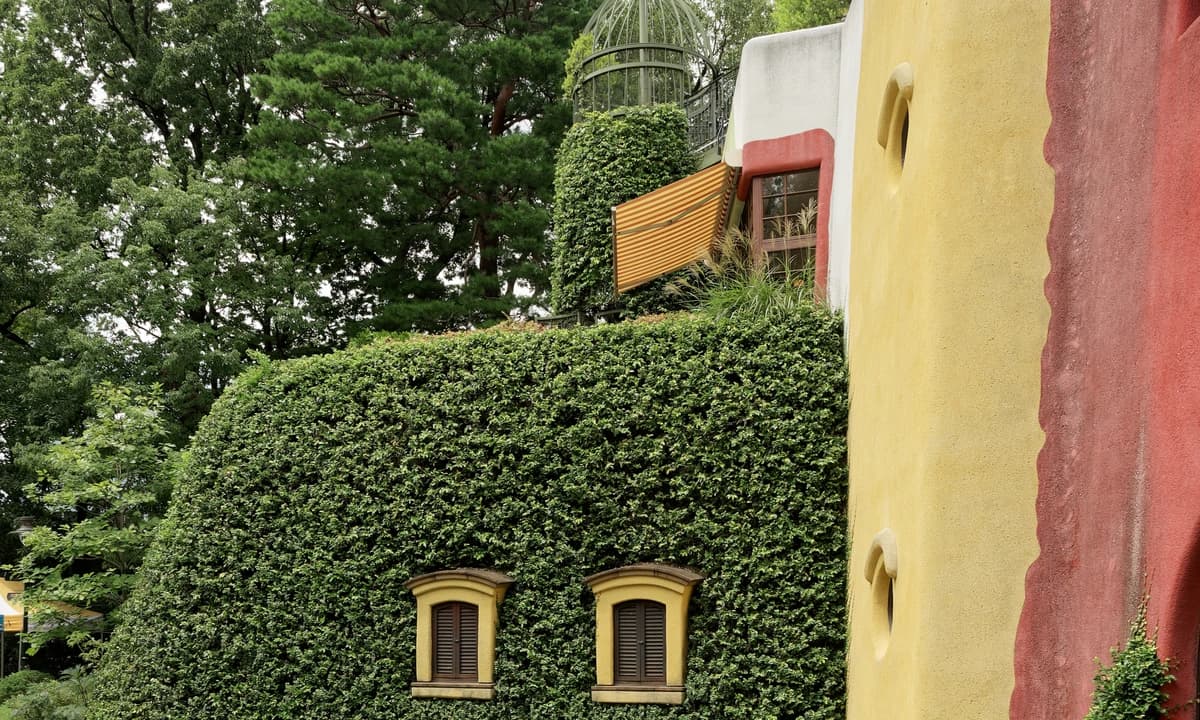
 Photo: Jakub Hałun / Wikimedia Commons, CC BY 4.0
Ghibli Museum Mitaka 2026: Lawson Ticket Guide + What to Expect
This guide includes affiliate links. We earn a small commission at no extra cost to you.
Last updated: May 2026. Opening hours, ticket pricing, Saturn Theater rotation, and access details cross-checked against the operator's English website at ghibli-museum.jp/en and the Lawson Ticket English portal at lawson.co.jp/ghibli_museum.
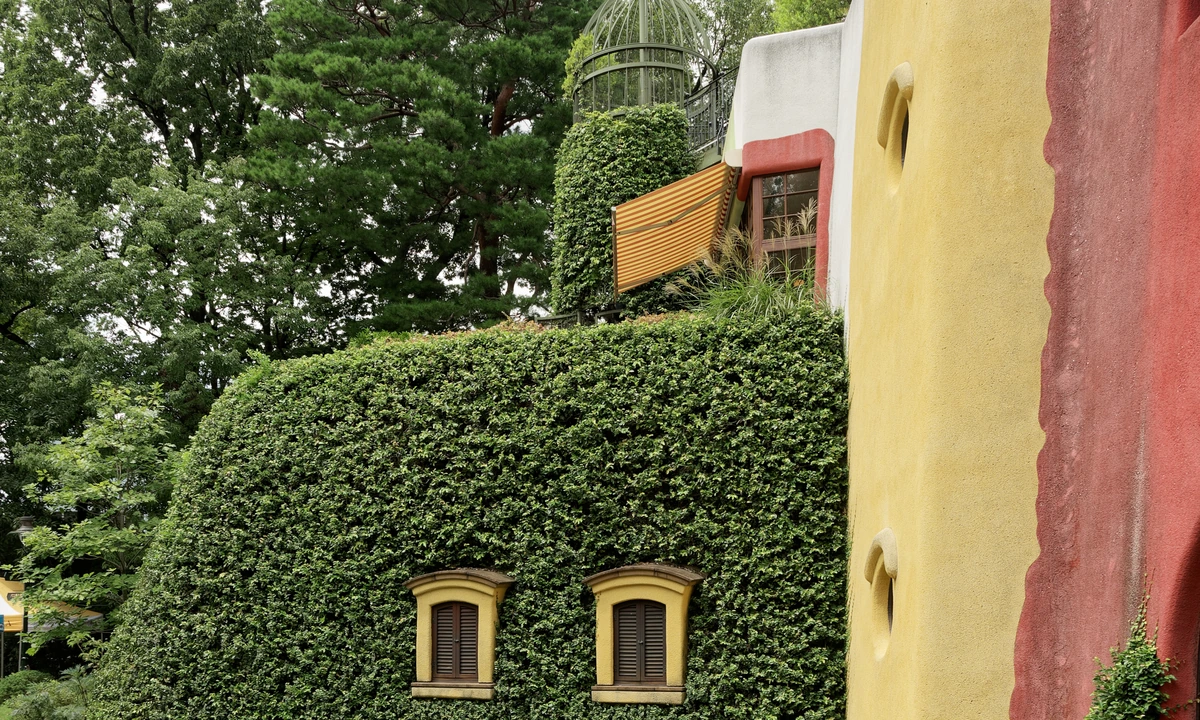 Ghibli Museum sits on the south edge of Inokashira Park, hand-designed by Hayao Miyazaki and opened in October 2001. Every admission is by advance reservation through Lawson Ticket. Photo: Jakub Hałun / Wikimedia Commons, CC BY 4.0.
The Ghibli Museum in Mitaka is one of the hardest tickets in Tokyo, and almost every English-speaking visitor learns this the hard way. Tickets are released at exactly 10:00 AM JST on the 10th of every month for the following month, and weekend slots have been observed to sell out in under fifteen minutes during peak inbound seasons per the operator's own release notes. This is the Ghibli museum designed personally by Hayao Miyazaki and opened in October 2001 — a different venue from Ghibli Park in Aichi, which opened in 2022 and is built for scale. The Mitaka museum is the intimate one: ~80 seats in the Saturn Theater, a hand-tiled spiral staircase, and a rooftop Robot Soldier from Castle in the Sky that looks down on Inokashira Park.
Ghibli Museum, Mitaka (三鷹の森ジブリ美術館) is the Studio Ghibli museum located at 1-1-83 Shimorenjaku, Mitaka-shi, Tokyo, on the south edge of Inokashira Park. Admission is by advance reservation only via Lawson Ticket, tickets release monthly on the 10th at 10:00 AM JST for the following month, the museum operates four entry windows per day at fixed slots, adult admission is ¥1,000, and the venue is roughly 15 minutes on foot or one Mitaka Community Bus from JR Mitaka Station's south exit.Planning a Mitaka + Kichijoji day? Klook sells a Tokyo Subway 24-hour pass from 800 yen in English that pairs cleanly with the JR Chuo Line ride to Mitaka. If you are already coming for the museum, plan a half-day around Inokashira Park and Kichijoji's cafe district to make the train ride worthwhile.
Across years of comparable Japanese reservation-only museum runs, the access and timing details below stay close to the operator norm; confirm specifics on the official site closer to your travel date.
Visit at a glance
| Detail | Info |
|---|---|
| Target reader | Studio Ghibli fans visiting Tokyo who want the original Miyazaki-designed museum, not Ghibli Park |
| Best window to visit | Weekday mornings (10:00 entry) outside school holidays; weekend slots fill first |
| Budget | ¥1,000 adult / ¥700 age 13–18 / ¥400 age 7–12 / ¥100 age 4–6 (free under 4), per the museum's English ticket page |
| Must-do | The Saturn Theater short film (Studio Ghibli original, only viewable here, ~80 seats) |
| English support | English ticket portal via Lawson, English museum map (PDF), staff with limited English at the gate |
| Photography | No photography or video inside the museum; rooftop garden is the only photo-permitted area |
The single most important thing to plan around is that the museum sells nothing on-site — no walk-up tickets, no day-of upgrades, no overflow. If you arrive without a reserved ticket for a specific 30-minute entry window, you are sent away. The Lawson Ticket portal at lawson.co.jp/ghibli_museum/english.html is the only authorized English channel.
Ghibli Museum (Mitaka) vs Ghibli Park (Aichi)
A common confusion among inbound visitors: there are two Studio Ghibli destinations, and they are not interchangeable. Ghibli Museum Mitaka is the original 2001 museum in west Tokyo, on the edge of Inokashira Park, with a footprint about the size of a large house and capacity for roughly 2,400 visitors per day across four entry slots. Ghibli Park in Aichi opened in 2022, sits inside the Expo 2005 Aichi Commemorative Park east of Nagoya, and spreads across five themed areas with ticket tiers running from ¥1,000 to ¥7,800.
| Ghibli Museum Mitaka | Ghibli Park (Aichi) | |
|---|---|---|
| Opened | 2001 | 2022 |
| Location | Mitaka, west Tokyo | Nagakute, Aichi (45 min from Nagoya) |
| Designer | Hayao Miyazaki personally | Studio Ghibli production team, multi-area |
| Scale | Single building + rooftop, ~2.5 hr visit | 5 themed areas, full day recommended |
| Adult ticket | ¥1,000 | ¥1,000–¥7,800 (tier) |
| Hardest ticket | Yes (sells in minutes monthly) | Weekend dates only |
| Visit pairs with | Inokashira Park, Kichijoji | Nagoya, Toyota stop |
Pick Mitaka if you want the personal Miyazaki design vocabulary — the spiral staircase, the stained-glass animation references, the original short films you cannot see anywhere else. Pick the Aichi park if you want to walk through the recreated film sets like Mei and Satsuki's house from My Neighbor Totoro. If your trip is Tokyo-only, the Aichi park is a bullet-train day trip and may not justify the trade-off; the full Ghibli Park complete guide breaks down the day-trip plan from Tokyo.
Weekly Tips
Get weekly anime travel tips — Join 1,000+ fans
The Lawson Ticket reservation system, step by step
This is where most international visitors lose the ticket. The operator's own published rule is "Tickets become available for purchase at 10 a.m. (JST) on the 10th of each month for the subsequent month," per the English ticket page. So tickets for August release on July 10 at 10:00 JST, tickets for September release on August 10 at 10:00 JST, and so on.
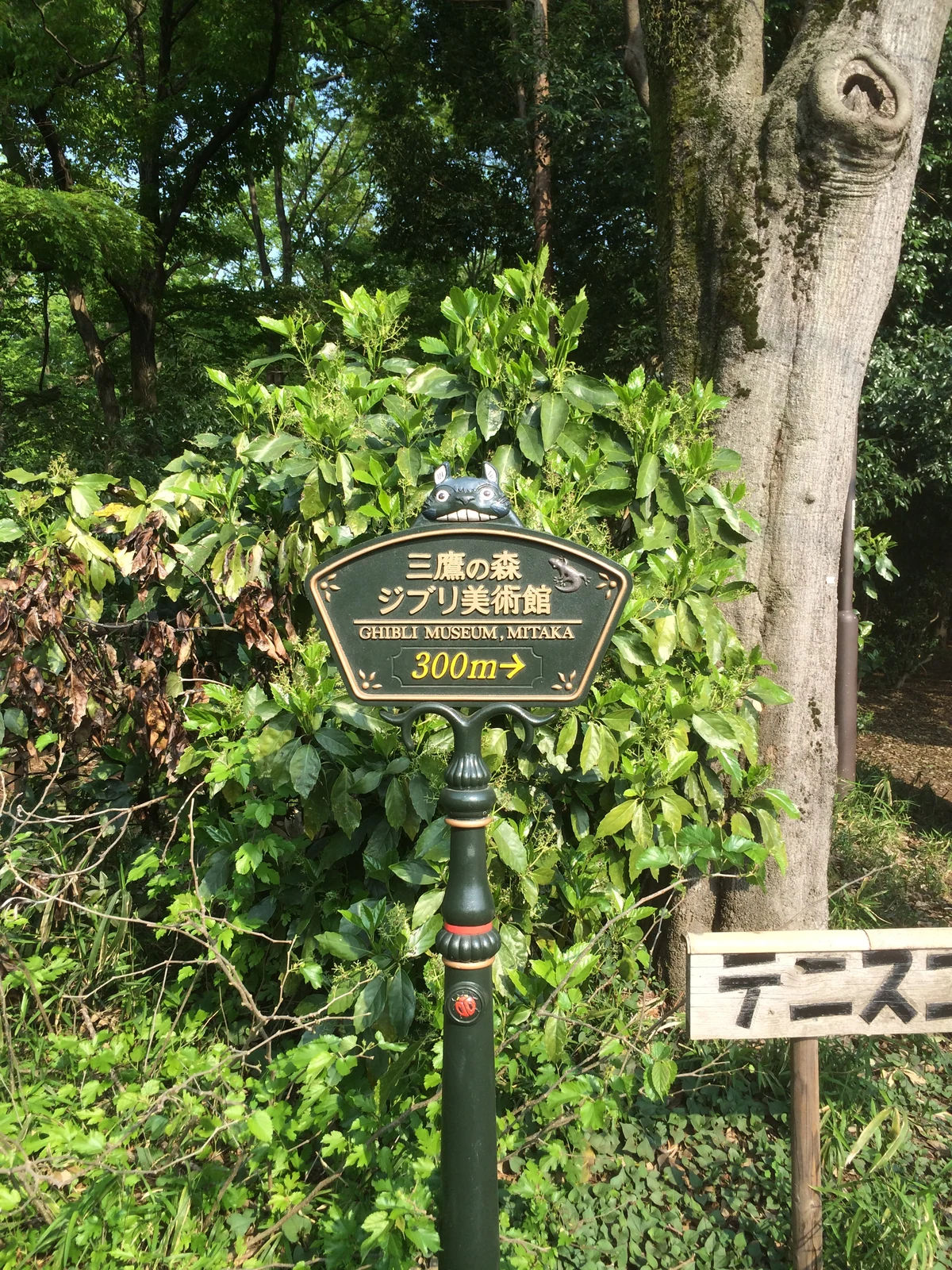 Museum entry signage on the approach path. The sign also marks the strictly-enforced "no photography inside" zone — the rooftop garden is the only place inside the property where cameras are permitted. Photo: Thibaut120094 / Wikimedia Commons, CC BY 4.0.
The five-step English flow looks like this:
- Open the Lawson Ticket English portal at lawson.co.jp/ghibli_museum/english.html ahead of release time. The "Click here to purchase tickets" link forwards to the actual purchase flow at l-tike.com.
- Be in the queue before 10:00 JST. The English portal does not pre-load the calendar; the date grid populates the moment release fires. Arriving at 10:01 has been reported by visitors as already too late for weekend slots in peak months.
- Pick an entry slot. The museum runs four entry windows per day — most reports describe these as 10:00, 12:00, 14:00, and 16:00 (museum hours 10:00–18:00, per the operator's English page). Tickets are valid only for the specified date and time, but the official page notes "no set exit times" — visitors typically stay 2 to 3 hours.
- Complete payment with an international card. Mastercard has the highest reported success rate per visitor reports on JapanTravel community forums; Visa and JCB also work most of the time. The portal supports English checkout.
- Save the digital ticket / print the voucher. At the gate, a staff member checks your printed Lawson voucher and passport against the reservation, then exchanges the voucher for the actual stained-glass admission ticket.
Selling-out speed varies sharply by month. April through November weekend slots are the toughest; January and February weekdays are the most relaxed per visitor-reported queue times. For peak season, treat 10:00 JST on the 10th as a hard alarm — there is no second chance for that month's release.
What to do if you miss the monthly release
Three honest backup options exist, in order of value:
- Wait for the next month's release. If your travel window is flexible, the simplest path is to try again at 10:00 JST on the next 10th. Mid-week slots tend to remain available for an hour or more after release in shoulder months.
- Packaged bus tours that bundle the museum with Tokyo highlights. Sunrise Tours JTB has historically sold a Ghibli Museum + Tokyo bus combination, and Klook lists Ghibli Museum bundle products — these draw from a separate ticket allocation and are sometimes available when the direct lottery is sold out. They cost more (typically ¥10,000–¥15,000 per person), but include round-trip transport, and the entry slot is fixed for you. Confirm the product details on the platform before booking; allocation can disappear within days of the monthly release.
- Travel-agent packages sold via Voyagin / Viator that include the museum ticket in a larger Tokyo experience. Verify the ticket-allocation source before purchasing — some resellers source from secondary aggregators with reduced reliability.
What does not work: walk-up tickets at the museum gate (none exist), domestic-resident-only Loppi kiosk tickets sold to non-residents (the museum cross-checks passport against reservation), and most third-party "ticket service" sites listed on travel blogs (they typically pull from the same Lawson allocation).
Stay Connected in Japan
Get an eSIM before you land — instant activation, no physical SIM swap needed. Data plans from ¥1,000 for 7 days.
from ¥1,000 / 7 days
Compare eSIM PlansWhat is actually inside the museum
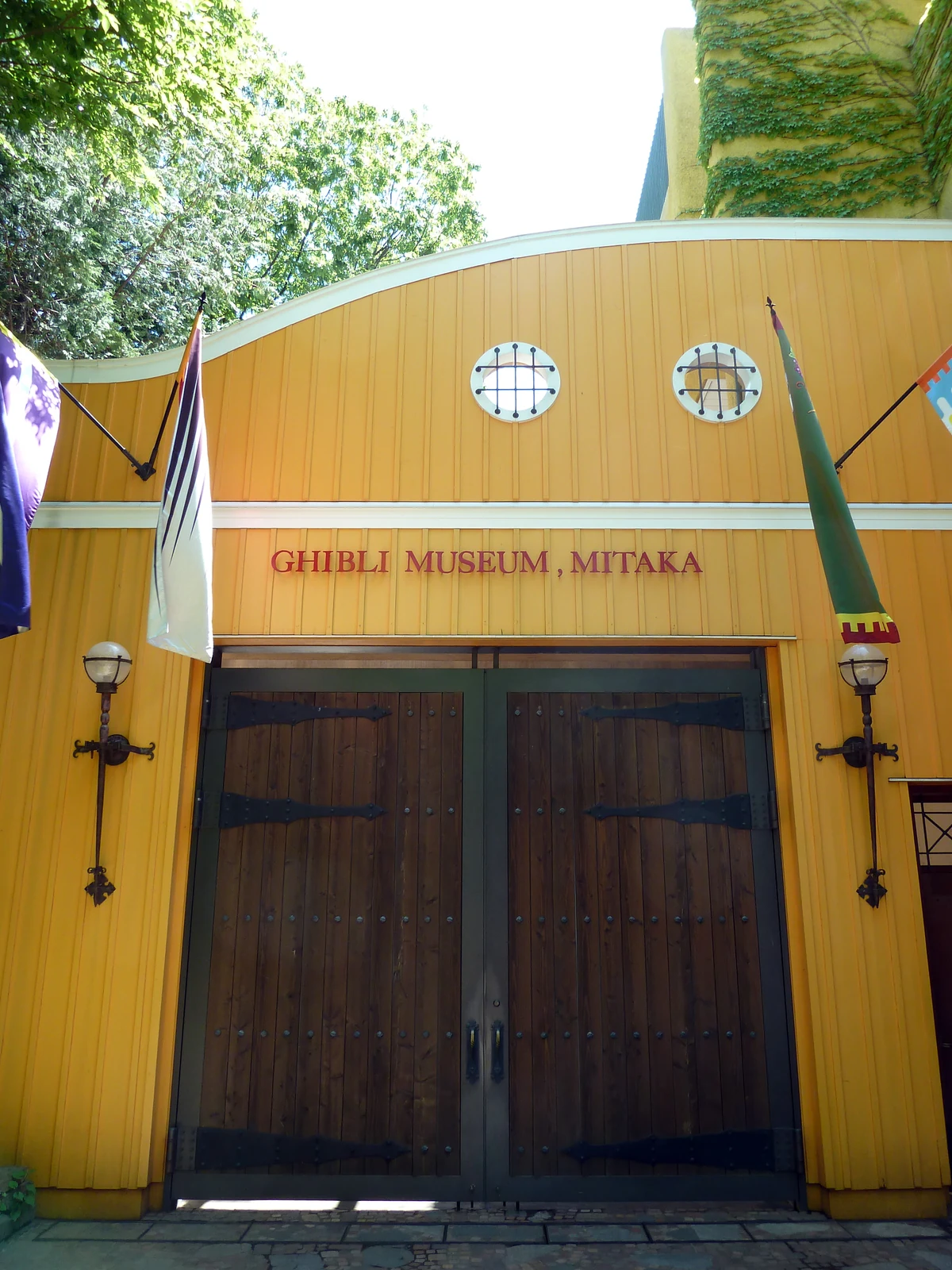 Detail of the museum façade. The building is small by museum standards — closer in footprint to a large house than to a national gallery, which is part of the design vocabulary. Photo: Rob Young / Wikimedia Commons, CC BY 2.0.
The building is small. The museum's own description opens with "When you walk along Kichijoji Avenue, in the shade of the tall green trees of Mitaka's Inokashira Park, you come upon a colorful building," and that single sentence is a fair preview of the scale. A 2.5-hour visit covers everything; a 90-minute visit covers the core. Here is what the operator publishes about each area, on ghibli-museum.jp/en/welcome:
- Saturn Theater (basement) — A small theater with only about 80 seats showing an original short animated feature from Ghibli, which can only be seen in the museum's theater. Admission is limited to one screening per visit.
- "Where a Film is Born" (1F) — A workshop-style exhibit showing how an animated film is made, with the museum's published note: "With a little bit of an idea and a flash of inspiration, a film-maker struggles with his work."
- Cat Bus (2F) — A soft Cat Bus you can climb into and touch, restricted to elementary-school children age 12 and under only. Adult visitors view from outside.
- Roof garden + Robot Soldier (rooftop) — Reached via a spiral stairway off the Cat Bus room. The five-meter Robot Soldier from Castle in the Sky looks down on Inokashira Park from the rooftop garden. This is the only photo-permitted area inside the museum.
- Mamma Aiuto! museum shop — Sells Studio Ghibli character products alongside original museum gift items.
- Straw Hat Café — Handmade items including breaded pork cutlets, hot dogs, sweet desserts, and beverages. The café is at the property edge with an outdoor terrace.
- Tri Hawks reading room — Books selected by Hayao Miyazaki and the museum staff, with seating for children to read.
A realistic 2.5-hour visit looks like: 30 minutes for the Saturn Theater screening, 40 minutes for the 1F "Where a Film is Born" exhibit, 30 minutes for the Cat Bus room and the spiral stair to the rooftop, 30 minutes for the shop and reading room, 20 minutes for the café. Add 30 minutes if you are bringing kids who want full Cat Bus time.
The Saturn Theater short film, and what is showing on your day
The Saturn Theater plays a single 13–17 minute original short, rotating monthly. The operator's English films page at ghibli-museum.jp/en/films lists upcoming rotation — for example, "Treasure Hunting" was scheduled for May 1–31, 2026; "The Day I Bought a Star" for June 1–29; "Mon Mon the Water Spider" for July 1–31. Check the official page before your visit to confirm what is currently in rotation.
Two operator-confirmed constraints to plan for: admission to the Saturn Theater is limited to one screening per visit, so you get exactly one short film per ticket. And the museum does not provide subtitles or audio guides for the shorts; visitors should expect a visual-driven, family-friendly experience that does not depend on Japanese-language comprehension to follow.
Access from central Tokyo
The museum is on the JR Chuo Line corridor, 28 to 35 minutes from Shinjuku Station depending on whether you take the Chuo Special Rapid or the Chuo Rapid service. Mitaka is the closer station; Kichijoji is one stop east and has a longer walk but more food options for a pre- or post-museum meal.
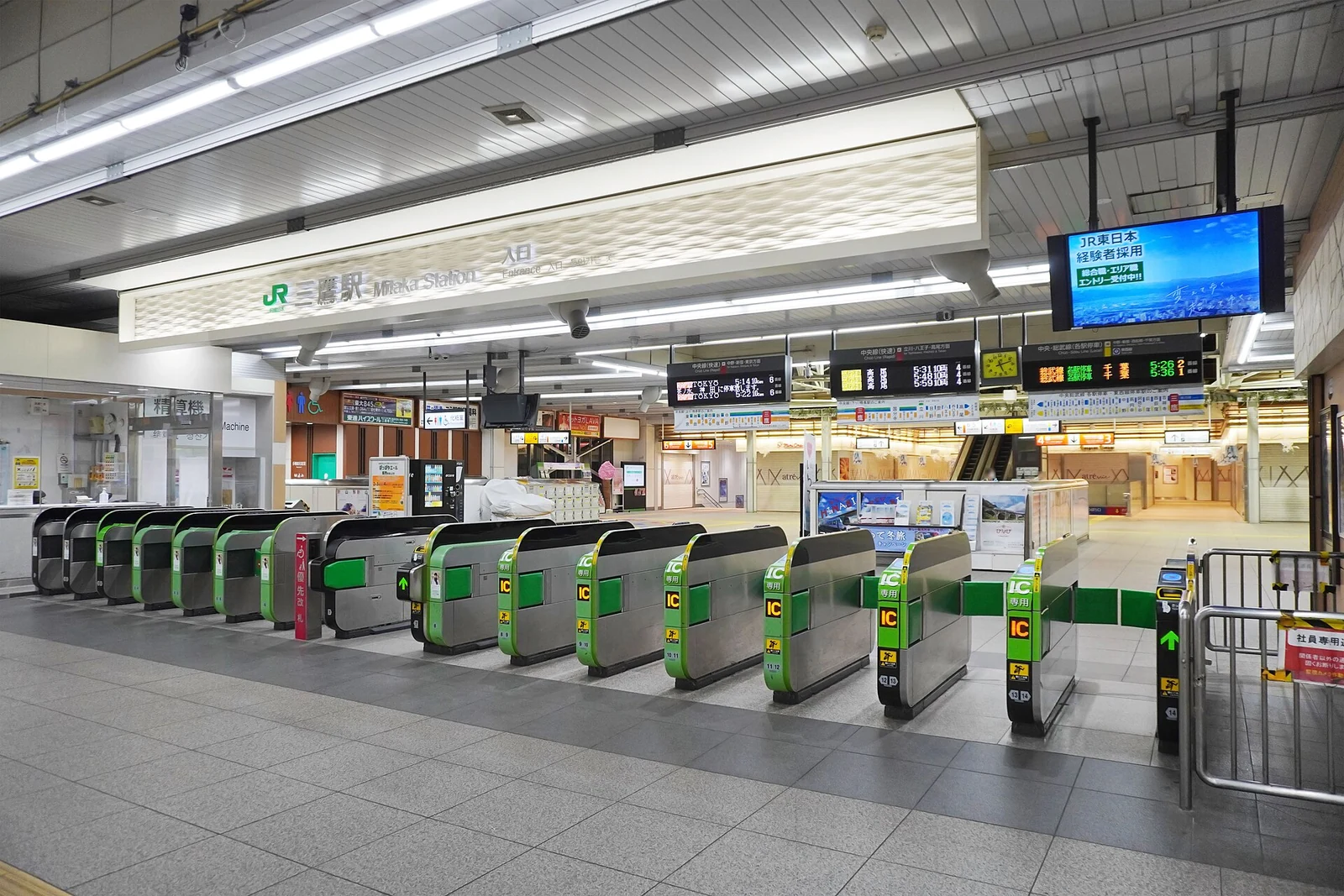 JR Mitaka Station main gate. The south exit is the route to Ghibli Museum — 15 minutes on foot through Inokashira Park or one Mitaka Community Bus stop. Photo: Mister0124 / Wikimedia Commons, CC BY-SA 4.0.
From Mitaka Station, two access modes work:
- Walk via Inokashira Park (15 min, free). From the south exit, follow the canal path through the south edge of Inokashira Park. The route is signposted in Japanese and English at key intersections. The walk passes the Tamagawa Aqueduct path that the museum itself references in its welcome text.
- Mitaka Community Bus (5 min, ¥230 cash / ¥230 IC card for adults). The Mitaka City Bus runs from JR Mitaka Station Bus Stop 9 to the museum every 15 minutes during opening hours, per the operator's English access page. The Ghibli-livery bus (C3012) carries character art on the exterior — visitors typically photograph it before boarding.
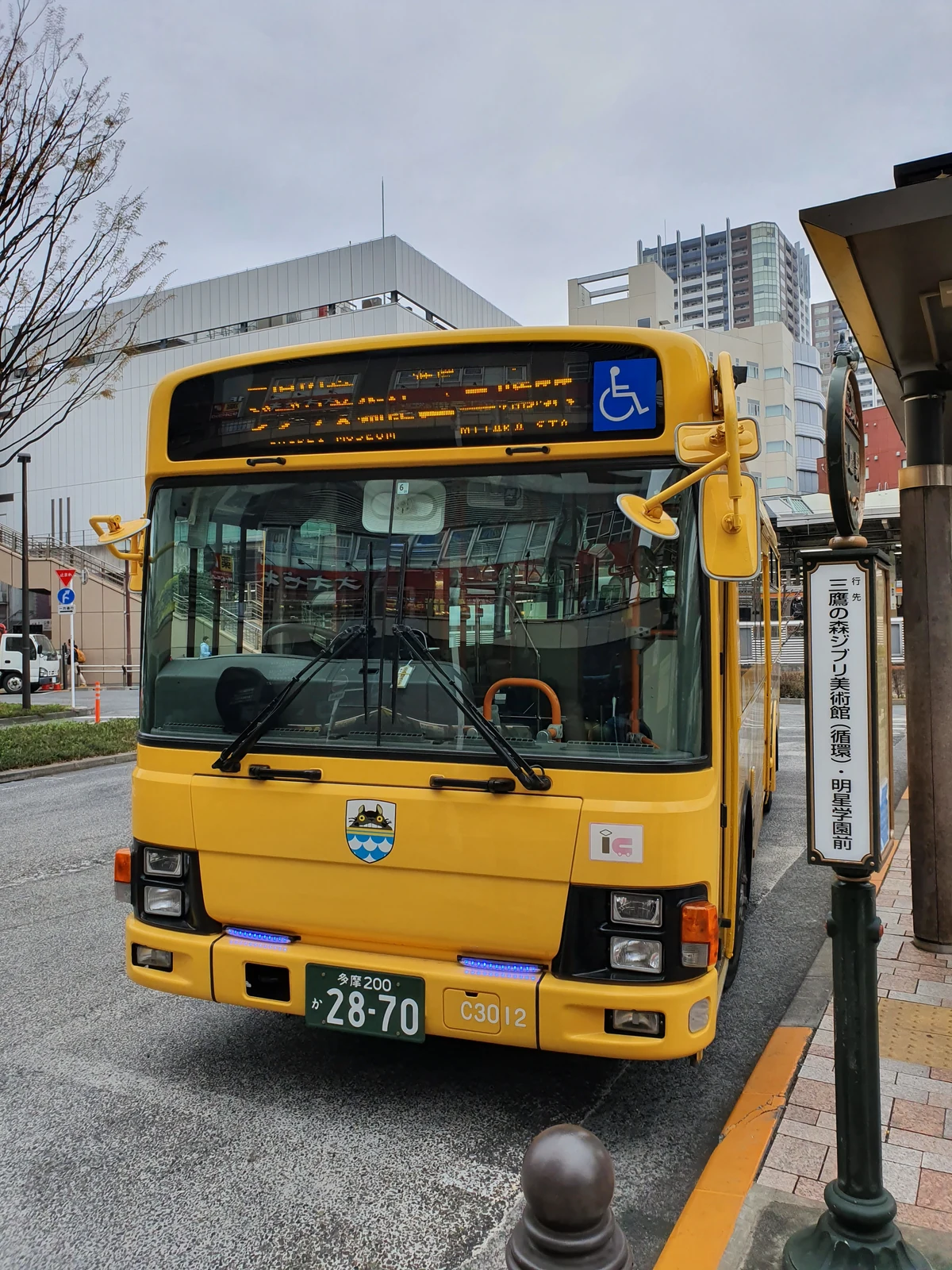 Mitaka City Bus C3012 in special Ghibli Museum livery at Bus Stop 9. The community bus is the rainy-day option; on a clear day the walk through Inokashira Park is the better introduction to the museum. Photo: Christopher Corneschi / Wikimedia Commons, CC BY-SA 4.0.
Kichijoji Station is the alternative entry point. The walk is closer to 20 minutes, but you cross Inokashira Park east-to-west, which means a stop at the boating pond and a longer cafe street to choose from before or after the museum. Plan Kichijoji if your day includes lunch in the cafe district.
Side trips from Mitaka and Kichijoji
The museum visit alone runs about 2.5 hours. Most visitors pair it with the surrounding neighborhood for a half-day:
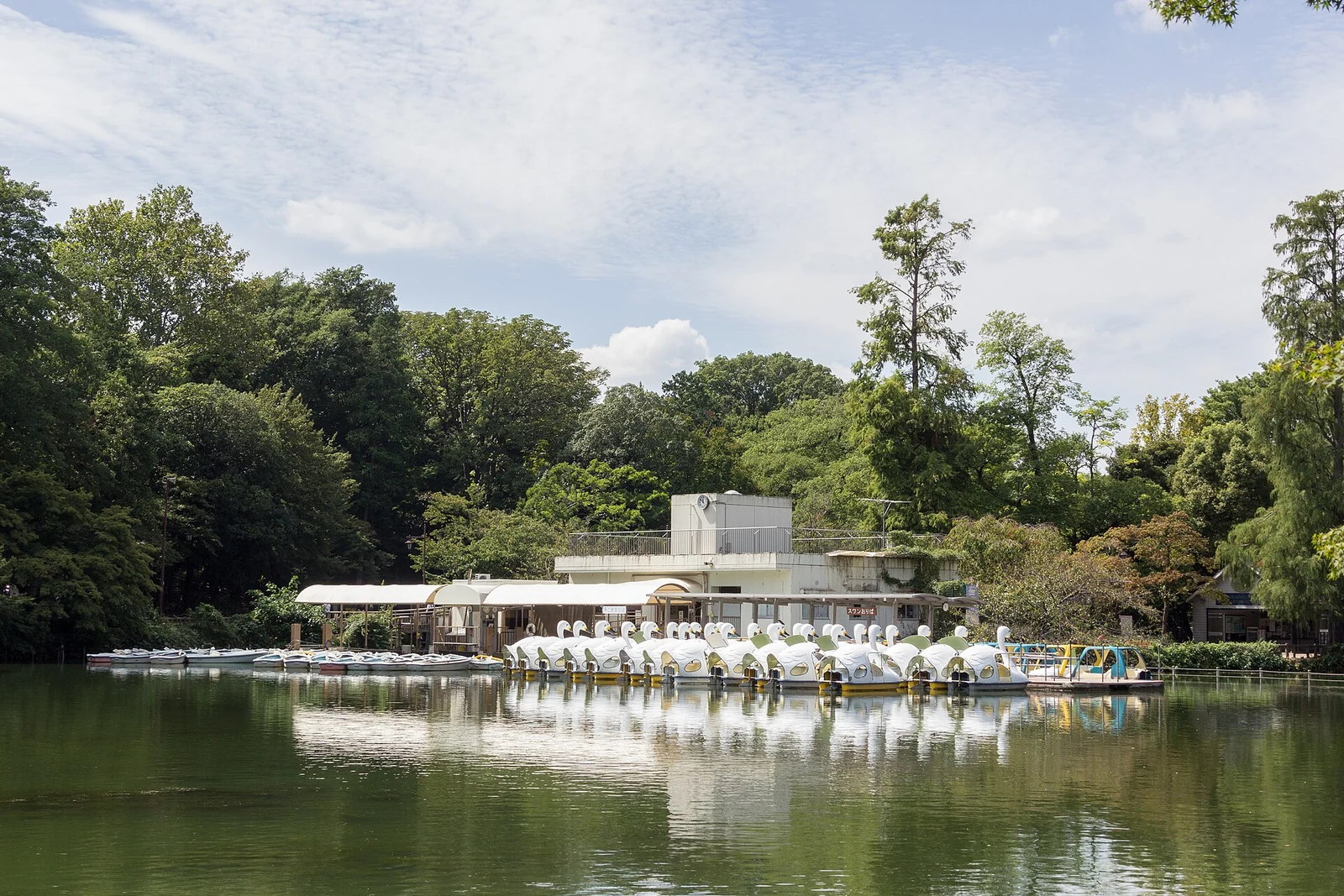 Inokashira Pond is the surface that the museum literally looks down on from its rooftop Robot Soldier. Renting a swan boat takes about 30 minutes and pairs well with a post-museum stroll. Photo: Real Estate Japan / Wikimedia Commons, CC BY 2.0.
- Inokashira Park and Pond — The park surrounds the museum on the north side. Swan-boat rentals on Inokashira Pond run about ¥700 for 30 minutes per visitor reports. Cherry blossoms in late March / early April, hydrangeas in June, autumn foliage late November.
- Inokashira Park Zoo (北口) — Small zoo on the park's north side, ¥400 adult admission; pairs with a Kichijoji walk-back rather than a Mitaka return.
- Kichijoji cafe district — One stop east on the JR Chuo Line. Vintage shops, third-wave coffee, Harmonica Yokocho alley for inexpensive izakaya in the evening. Walking from Kichijoji Station, the museum is 20 minutes on foot through the park.
- Sun Road shopping arcade (Kichijoji) — Covered shopping street, family-friendly, useful in rain.
- Tamagawa Aqueduct path — A canal-side walking path that runs east from the museum toward Kichijoji; the museum's own welcome text references the Aqueduct's surrounding green. Quiet, residential, photogenic.
Photography policy — strictly enforced
The operator's English page on accessibility states verbatim: "Please don't take photos or videos inside the museum." Staff actively enforce this — visitors who lift a phone for a photo on the spiral staircase, in the Saturn Theater, in the "Where a Film is Born" exhibit, in the Cat Bus room, in the shop, or in the cafe are asked to put the phone away.
The single exception is the rooftop garden, where the five-meter Robot Soldier statue is the photo subject most visitors come for. The rooftop is open-air and exterior; photography is permitted there. Visitors typically queue 5–10 minutes during peak hours for the photo position with the Robot facing the camera.
Bringing a camera into the museum is fine; using it inside is not. There is no bag check that requires you to deposit camera equipment, only the in-museum behavior policy.
Related Reads
FAQ — Frequently Asked Questions
What happens if I miss the 10:00 JST release on the 10th?
You wait for the next month's release. Weekend slots in peak months (April–November) typically sell out within minutes. Weekday slots, especially Tuesday and Wednesday in shoulder months, often remain available for an hour or more after release. If your travel dates are fixed and you missed the release, check Klook / Sunrise Tours JTB / Voyagin for packaged bus-tour bundles that carry their own ticket allocation — they cost more (¥10,000–¥15,000) but offer a second path.
Can I buy tickets at the museum on arrival?
No. The operator's English page is explicit: "Entrance to the Ghibli Museum is strictly by advance purchase of a reserved ticket which specifies the entry date and time of the reservation." There is no walk-up window, no overflow ticket pool, and no day-of upgrade. Visitors who arrive without a reserved ticket are turned away at the gate.
Is the museum wheelchair- and stroller-accessible?
Yes for most public areas. The museum's accessibility page notes that hearing-assistance earphones are available at the Saturn Theater and that the spiral staircase to the roof has step-free alternatives via elevator. Stroller storage is available at the entrance — strollers must be parked rather than pushed through the narrow corridors. Confirm specific accommodations on ghibli-museum.jp/en/info before your visit.
What is the lowest-crowd month to visit?
January and February weekdays draw the fewest crowds per visitor-reported patterns, primarily because Mitaka in winter is cold and rainy at this latitude. The trade-off is that Inokashira Park is leafless and less photogenic. October weekdays are the next-best window, with autumn foliage in the park. Avoid school holidays (late March, May 1–7 Golden Week, mid-July through August, late December) — every entry slot in those windows tends to be claimed within the first ten minutes of release.
Is the Saturn Theater short film in English?
No subtitles, no dubbed English audio, and no audio guide. The shorts are produced in Japanese for the museum and are largely visual / family-friendly, so non-Japanese speakers can follow the story. The museum has not published an English-language version of any of the shorts as of May 2026, per the operator's films page. Plan to enjoy the visual rather than the dialogue.
Is there food inside the museum, and how is the Straw Hat Café?
The Straw Hat Café (Mugiwarabōshi) is on the property edge with an outdoor terrace, and serves handmade items per the operator's description — breaded pork cutlets, hot dogs, sweet desserts, and beverages. Visitor reports describe modest portions and high turnover at peak hours; expect a wait if you arrive at the 12:00 entry window. The café accepts cash and most major IC cards.
Is tipping expected at the museum or café?
No. Tipping is not part of standard Japanese service culture, and neither the museum nor the café accepts tips. The ticket price and menu price are inclusive of service. Visitors who want to support the museum should buy from the Mamma Aiuto shop, which sells Studio Ghibli character products alongside original museum-only gift items.
Other Studio Ghibli & Tokyo museum guides
Inokashira and Mitaka are the western Tokyo end of a long Studio Ghibli day. For the rest of the route and the other character-IP destinations in Tokyo:
- Ghibli Park Complete Guide 2026 — the Aichi park, when to pick it over Mitaka, and the bullet-train day-trip plan from Tokyo
- Pokemon Center Tokyo 2026: 4 Stores + Cafe Complete Guide — the other major Tokyo character-IP destination, with a 90-minute hub-loop plan
- Chiikawa Land Tokyo Complete 2026 — the Tokyo Station Chiikawa flagship, paired well with a Skytree day
- Tokyo Anime District Guide — the broader Akihabara / Ikebukuro / Shibuya / Nakano landscape, with Inokashira / Mitaka marked as the Studio Ghibli home base
- Anime Day Trips from Tokyo 2026 — adjacent half-day and full-day extensions that pair with a Mitaka morning
Image Credits
- Hero (Ghibli Museum exterior, August 2024): Jakub Hałun / Wikimedia Commons, CC BY 4.0.
- Body image (Ghibli Museum exterior alternate angle): Rob Young / Wikimedia Commons, CC BY 2.0.
- Body image (Ghibli Museum entrance signage, 2014): Thibaut120094 / Wikimedia Commons, CC BY 4.0.
- Body image (Mitaka City Bus C3012 in Ghibli livery): Christopher Corneschi / Wikimedia Commons, CC BY-SA 4.0.
- Body image (JR East Mitaka Station main gate, January 2024): Mister0124 / Wikimedia Commons, CC BY-SA 4.0.
- Body image (Swan boats on Inokashira Pond, September 2019): Real Estate Japan / Wikimedia Commons, CC BY 2.0.
Sources — operator-published references
Every price, opening figure, entry-slot, photography rule, address, and film-rotation date in this guide was cross-checked against the operator's English-language site in May 2026:
- Ghibli Museum English home: ghibli-museum.jp/en
- Tickets and reservation rules: ghibli-museum.jp/en/tickets
- Hours and directions: ghibli-museum.jp/en/hours-and-directions
- Inside the museum (Saturn Theater / Cat Bus / Robot Soldier / shop / café): ghibli-museum.jp/en/welcome
- Saturn Theater short-film rotation: ghibli-museum.jp/en/films
- Accessibility and photography policy: ghibli-museum.jp/en/info
- Lawson Ticket English portal (the only authorized English purchase channel): lawson.co.jp/ghibli_museum/english.html
- Ghibli Park (Aichi) — comparison source for the museum-vs-park decision: ghibli-park.jp/en/ticket
- Wikipedia (museum history): en.wikipedia.org/wiki/Ghibli_Museum
If the operator changes the monthly release time, ticket tiers, or short-film schedule, the source URLs above are the authoritative update channel.
Get an eSIM before you land — instant activation, no physical SIM swap needed. Data plans from ¥1,000 for 7 days.
Follow @pop_now_jp on Threads for daily Tokyo pop culture updates.
Free Weekly Guide
Free: Top 10 Anime Collab Cafes Open This Month
Join anime fans getting weekly collab cafe updates, pilgrimage guides, and Japan travel tips.
One-click unsubscribe in every email. Operated by Japan Pop Now from Tokyo, Japan. We do not sell, rent, or share your email. See our Privacy Policy and Terms for full details.
You Might Also Like

Ghibli Park Complete Guide 2026: Tickets, Access & Tips

Pokemon Center Tokyo 2026: 4 Stores + Cafe Complete Guide
Chiikawa Land Tokyo 2026: Tokyo Station Store Complete Guide

Tokyo Anime Districts 2026: Akihabara, Nakano + 3 More
