Akihabara Arcade Rhythm Games: First-Timer Guide 2026
This guide includes affiliate links. We earn a small commission at no extra cost to you.
6 game centers within a 5-minute walk, 8 rhythm game machines at 100 yen per play, and zero Japanese required to start. Across multiple visits documenting Akihabara's arcade district, this guide covers every major rhythm game cabinet, maimai, CHUNITHM, Sound Voltex, Taiko no Tatsujin, beatmania IIDX, and the rest. The breakdown below names the first-timer-friendly machines, the arcades with the best setups, and the regulars' tips international visitors typically miss.
Japanese arcade rhythm games: otoge (音ゲー, short for ongaku game, meaning "music game"), are coin-operated cabinet games found in game centers (ゲームセンター) across Japan, where players tap buttons, hit drums, or touch screens in time with music for 100 yen per 2-3 song session, with Akihabara hosting the highest concentration of machines in Tokyo.| Detail | Info |
|---|---|
| Target Reader | First-time visitors to Japanese arcades |
| Best Time to Visit | Weekday afternoons (1-5 PM), machines free, regulars at work |
| Budget | 2,000-3,000 yen for a solid 2-hour session |
| Must-Do | Start with Taiko no Tatsujin, most intuitive for beginners |
| English Support | maimai, CHUNITHM, and IIDX have English UI. Taiko is partial |
Skip the Japanese-only reservation hassle for Akihabara tours: book a guided Akihabara experience on Klook for an English-speaking guide who knows which floors have the best rhythm game setups. Across years of comparable Japanese experience-format runs, the access and timing details below stay close to the operator norm, confirm specifics on the official site closer to your travel date.
Which Rhythm Game Should I Play First?
Start with Taiko no Tatsujin (Taiko no Tatsujin, 太鼓の達人), the long-running Bandai Namco drum cabinet series (official Japan portal). You hit a physical drum with wooden sticks. Red notes mean hit the center, blue notes mean hit the rim. That is the entire control scheme. The machine is loud, satisfying, and impossible to feel self-conscious about because everyone around you is also flailing. 100-200 yen for 2-3 songs. Second try: maimai DX (SEGA). A circular screen surrounded by buttons and touch zones. You tap, hold, and swipe in rhythm. The machine has English language support built in — press the globe icon on the title screen. The visual spectacle of the circular display draws a crowd, and the song library skews toward J-pop and Vocaloid. 100 yen for 3 songs.
For the challenge-hungry: CHUNITHM (SEGA's air-sensor rhythm cabinet). A flat panel with an air sensor above it. You touch the panel AND wave your hands through the air to hit notes. The skill ceiling is extraordinarily high — watching a veteran player looks like watching someone conduct an invisible orchestra at triple speed. 100 yen for 3 songs. The deep end: beatmania IIDX (KONAMI BEMANI series, since 1999). 7 keys plus a turntable. This is the granddaddy of Japanese rhythm games, running since 1999, and it does not hold your hand. The community is passionate and the skill gap is massive. Try it once to appreciate the depth, but do not expect to clear songs on your first session. 100 yen for 3 songs.
| Machine | Maker | Difficulty | Best For | Cost |
|---|---|---|---|---|
| Taiko no Tatsujin | Bandai Namco | Low | Absolute beginners, groups | 100-200 yen / 2-3 songs |
| maimai DX | SEGA | Low-Medium | Visual spectacle, J-pop fans | 100 yen / 3 songs |
| CHUNITHM | SEGA | Medium | Players who want physical movement | 100 yen / 3 songs |
| Sound Voltex | KONAMI | Medium-High | EDM fans, knob-turning action | 100 yen / 3 songs |
| Ongeki | SEGA | Medium | Anime song fans, lever + shooting | 100 yen / 1-3 songs |
| beatmania IIDX | KONAMI | Very High | Hardcore rhythm game veterans | 100 yen / 3 songs |
| Project Sekai Arcade | SEGA | Low-Medium | Vocaloid fans, mobile game players | 100 yen / 3 songs |
Which Akihabara Game Center Should I Visit?
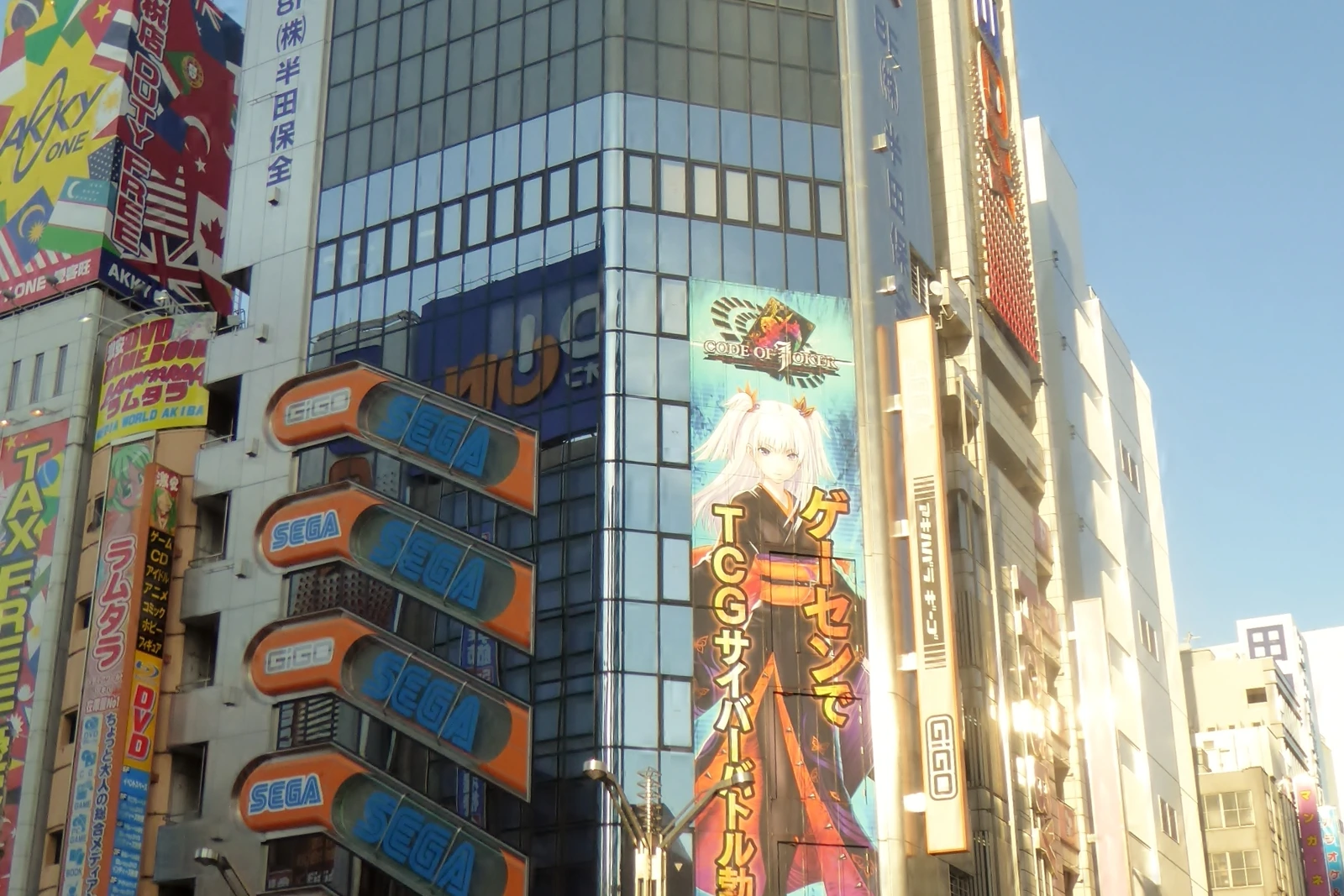 Akihabara GiGO building (formerly SEGA Akihabara 2nd Building). Photo: Tokumeigakarinoaoshima / Wikimedia Commons, CC0.
GiGO Akihabara 3rd Building is the all-rounder. The 5th floor has every major rhythm game machine in one space, maimai, CHUNITHM, IIDX, Sound Voltex, DDR, and Ongeki. The 6th floor houses RETRO:G, a retro gaming section. 10:00-23:30, 3-minute walk from Electric Town Exit.
HEY (Hirose Entertainment Yard) is the atmosphere pick. Located at Sotokanda 1-10-5 on a side street off the main drag, HEY has a devoted following among fighting game and rhythm game players. The vibe skews more local and less tourist-heavy. IIDX cabinets here are maintained to tournament standards. 10:00-23:30. Eternal Amusement Tower (formerly Try Amusement Tower) has dedicated rhythm game floors (4F-6F) with sound optimization. If audio quality matters to you, and for rhythm games it should, this is the place. The machines are calibrated with less input lag than average. Weekdays 10:00-24:00, weekends/holidays until 25:00. Tokyo Leisureland Akihabara occupies floors 6-7 of the Don Quijote building. The late closing time (25:00) makes it the go-to for night owls. Machine variety is strong, and the location inside Don Quijote means you can combine arcade time with discount shopping. 10:00-25:00. Silkhat Akihabara opened in November 2025 in the former GiGO 1st Building location (the iconic red building that closed in August 2025 after 33 years). Operated by Matahari Entertainment, the new space has modern machines and a cleaner layout.
Weekly Tips
Get weekly anime travel tips — Join 1,000+ fans
How Do I Pay and What Cards Do I Need?
100-yen coins are the universal currency. Every game center has change machines near the entrance, feed in a 500-yen coin or a 1,000-yen bill and receive 100-yen coins. Some newer machines accept IC cards (Suica, PASMO), but coin operation is still the default at most cabinets. Player cards are optional but recommended if you plan to play more than 3 sessions. Each manufacturer has its own card system: Aime (SEGA) works with maimai, CHUNITHM, Ongeki, and Project Sekai Arcade. Buy one at any SEGA game center counter for 300 yen. The card saves your scores, unlocks songs, and tracks your progress across all SEGA rhythm games. e-amusement pass (KONAMI) works with beatmania IIDX, Sound Voltex, and other KONAMI titles. Available at KONAMI game center counters for 330 yen. Banapassport (Bandai Namco) works with Taiko no Tatsujin. Available at Bandai Namco game center counters for 300 yen. You can play every machine without a card — just select "Guest Play" or "No Card" on the title screen. You will not save your scores, but you will get the full gameplay experience.
What Are the Unwritten Rules of Japanese Arcades?
Do not touch other players' machines. Each cabinet is personal space. Standing behind someone to watch is fine — leaning on their cabinet or reaching across is not. Keep food and drinks off the machine area. Most arcades sell drinks from vending machines. Drink them in the designated areas, not at the cabinet. Headphones are welcome on machines that support them. Many rhythm game cabinets have a headphone jack on the front panel. Bringing your own headphones gives better audio and lets you focus without the ambient arcade noise. The "100 yen on the cabinet" signal. If you see a 100-yen coin placed on the edge of a machine's screen or panel, it means someone is claiming the next turn. This is a queue system. Place your coin and wait. Volume controls exist. Most machines have a volume dial or buttons near the headphone jack. Feel free to adjust, the previous player may have cranked it.
Stay Connected in Japan
Get an eSIM before you land — instant activation, no physical SIM swap needed. Data plans from ¥1,000 for 7 days.
from ¥1,000 / 7 days
Compare eSIM PlansHow Much Does a Full Akihabara Arcade Session Cost?
A realistic 2-hour session budget looks like this: 100-yen coins used: 15-20 plays. At 100 yen per 3-song credit, that is roughly 45-60 songs for 1,500-2,000 yen. Optional player cards: 300-330 yen each. If you buy all three (Aime, e-amusement, Banapassport), that is about 1,000 yen. Total budget for a casual visitor: 2,000-3,000 yen. For a dedicated session trying every machine: 4,000-5,000 yen. The most expensive trap is the crane game floor on the way out. Budget an extra 1,000 yen if you have zero self-control around anime prize figures.
Why this draws such a crowd
Arcade rhythm games — otoge (音ゲー), occupy a cultural niche in Japan that has no direct Western equivalent. They combine competitive skill mastery with public performance in a way that mirrors martial arts grading or music recitals. The community aspect drives the culture. Regular players at a specific arcade know each other by sight. They share strategies, celebrate score milestones, and maintain an unspoken hierarchy based on skill level. The arcade is a third place — not home, not work, where identity is built through gameplay. The machines themselves are designed for this social ecosystem. Score-sharing systems, rival matching, and in-game events create reasons to return daily. Dedicated maimai players often visit their local arcade multiple times per week. The rhythm game floor is not a casual entertainment option for these players — it is a practice studio. For overseas visitors, the appeal is simpler: these machines do not exist outside Japan in this density or quality. The cabinet maintenance, the audio calibration, the sheer variety. 8 different rhythm game machines on one floor is normal in Akihabara and impossible in most countries.
Related Reads
- Ghibli Museum Mitaka 2026: Lawson Ticket Guide + What to Expect →
- Marugame x Dragon Ball Z 2026: Senzu Tempura + 32 Tickets →
- Ranma 1/2 Japan 2026: Exhibition + Tree Village Pop-Up Guide →
- Chiikawa Land Tokyo 2026: Tokyo Station Store Complete Guide →
- Frieren USJ Story Walk Osaka 2026: Pre-Launch Guide →
FAQ: Frequently Asked Questions
Do I need to speak Japanese to play arcade rhythm games? No. maimai, CHUNITHM, and beatmania IIDX all have English language options accessible from the title screen. Taiko no Tatsujin has partial English support. The gameplay itself is visual, follow the on-screen notes, no reading required. How much money should I bring in coins? Start with 2,000 yen in 100-yen coins (20 plays). The change machines accept 500-yen coins and 1,000-yen bills. Avoid feeding 10,000-yen bills, most machines do not accept them. What is the best time to visit Akihabara arcades? Weekday afternoons between 1 PM and 5 PM. The morning crowd is thin but machines may still be warming up. Evening and weekend hours bring the regulars, meaning longer waits for popular cabinets like maimai and CHUNITHM. Can I take photos and videos inside game centers? Policies vary by arcade. Most allow personal photos and videos of your own gameplay. Recording other players without permission is not acceptable. Check for posted signs near the entrance, some floors prohibit all photography. Which arcade is best for a first-time visitor? GiGO Akihabara 3rd Building. It has every major machine type in one space, clear signage, and a tourist-friendly atmosphere. Start there, then branch out to Eternal Amusement Tower or HEY once you know which machines you prefer.
More Experience Guides
- Re:Zero × Cure Maid Café Akihabara 2026 Visitor Guide. Akihabara collab cafe sister run at the Onoden Building, two minutes from the same Electric Town Exit
- Akihabara Anime Guide 2026
- Gachapon Guide Japan: Where to Find the Best Capsule Machines
- Anime Merch Shopping Guide Japan
- Best Anime Tours Tokyo 2026
- Ikebukuro Anime Guide 2026 Book your full Akihabara experience on Klook, guided anime district tours with arcade stops included, from 3,500 yen per person.
Get an eSIM before you land — instant activation, no physical SIM swap needed. Data plans from ¥1,000 for 7 days.
Follow @pop_now_jp on Threads for daily Tokyo pop culture updates.
Free Weekly Guide
Free: Top 10 Anime Collab Cafes Open This Month
Join anime fans getting weekly collab cafe updates, pilgrimage guides, and Japan travel tips.
One-click unsubscribe in every email. Operated by Japan Pop Now from Tokyo, Japan. We do not sell, rent, or share your email. See our Privacy Policy and Terms for full details.
You Might Also Like
Ghibli Museum Mitaka 2026: Lawson Ticket Guide + What to Expect
Marugame x Dragon Ball Z 2026: Senzu Tempura + 32 Tickets
Ranma 1/2 Japan 2026: Exhibition + Tree Village Pop-Up Guide
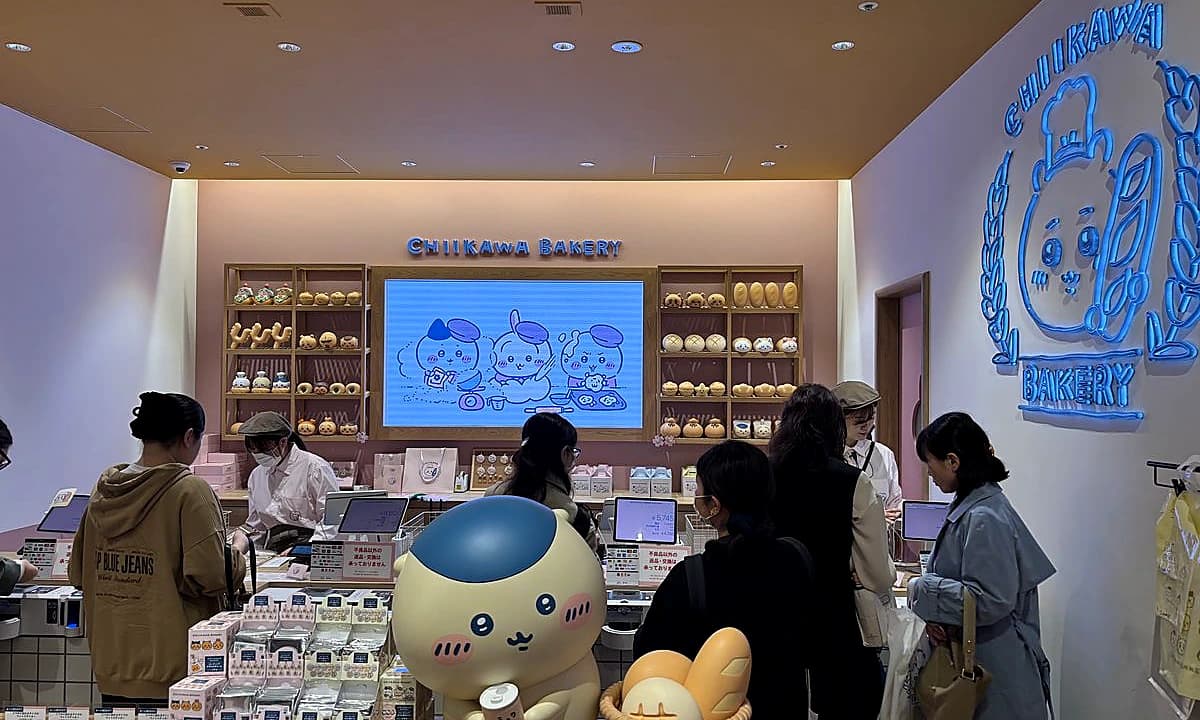
Chiikawa Land Tokyo 2026: Tokyo Station Store Complete Guide